MCQ
Identify the correct statement about the magnetic field lines:
- AThese start from the N-pole and terminate on the S-pole.
- BThese lines always form closed loops.
- CBoth (a) and (b) are correct.
- DBoth (a) and (b) are wrong.
Explanation:
The magnetic field lines of a simple magnet are shown in the picture below.They point from the north pole to the south pole. However, the magnetic field lines do not just end at the tip of the magnet. They go right through it, so that inside the magnet the magnetic field points from the south pole to the north pole.
Magnetic field lines form closed loops since magnetic monopoles doesn't exist unlike an electric charge.
Generate a complete, print-ready paper with questions like this in minutes — across 16+ boards, with answer keys.
Assertion : The following circuit represents 'OR' gate
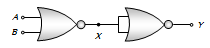
Reason : For the above circuit Y = 
|
(a) If both assertion and reason are true and the reason is the correct explanation of the assertion. |
|
(b) If both assertion and reason are true but reason is not the correct explanation of the assertion. |
|
(c) If assertion is true but reason is false. |
|
(d) If the assertion and reason both are false. |
In Young's double slit experiment, a glass plate is placed before a slit which absorbs half the intensity of light. Under this case
|
(a) The brightness of fringes decreases |
|
(b) The fringe width decreases |
|
(c) No fringes will be observed |
|
(d) The bright fringes become fainter and the dark fringes have finite light intensity |
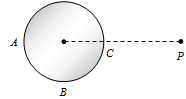
A hollow conducting sphere is placed in an electric field produced by a point charge placed at P as shown in figure. Let  be the potentials at points A, B and C respectively. Then
|
(a) |
(b) |
(c) |
(d) |
The radius of the orbital of electron in the hydrogen atom 0.5 Å. The speed of the electron is 2  . Then the current in the loop due to the motion of the electron is
|
(a) 1 mA |
(b) 1.5 mA |
(c) 2.5 mA |
(d) 1.5 |
A magnifying glass is used to read the newspaper. As it is moved far away from the newspaper:
Assertion : X-rays cannot be diffracted by means of grating.
Reason : X-rays does not obey Bragg's law.
|
(a) If both assertion and reason are true and the reason is the correct explanation of the assertion. |
|
(b) If both assertion and reason are true but reason is not the correct explanation of the assertion. |
|
(c) If assertion is true but reason is false. |
|
(d) If the assertion and reason both are false. |
The inward and outward electric flux for a closed surface in units of  are respectively
  and
and  Then the total charge inside the surface is [where
  = permittivity constant]
|
(a) |
(b) - |
(c) |
(d) |


