Question
The liquid connective tissue A circulates in our body continuously without stopping. This tissue contains a pigment B which imparts it a colour C. The tissue A consists of four components D, E, F and G. The component D fights infection and protects us from diseases. The component E helps in the clotting of tissue A if a person gets a cut. The component F is a liquid which consists mainly of water with many substances dissolved in it and component G carries oxygen from the lungs to all the parts of the body.
  1. What is (i) tissue A, (ii) pigment B and (iii) colour C?
  2. Name (i) D, (ii) E, (iii) F and (iv) G.
  3. Name one substance (other than oxygen) which is transported by tissue A in the human body.
  4. Which two components of tissue A are the cells without nucleus?
  5. Name any two organisms (animals) which do not have liquid like A in their body.
Answer

  1.  
  1. Blood is the liquid connective tissue that circulates in our body continuously without stopping. Hence, A is blood.
  2. Our blood contains a pigment called haemoglobin, which imparts it a red colour. Hence, pigment B is haemoglobin and colour C is red.
  3. Our blood contains a pigment called haemoglobin, which imparts it a red colour. Hence, pigment B is haemoglobin and colour C is red.
  1.  
  1. White blood cells, fight infection and protect us from diseases. Hence, D refers to white blood cells.
  2. Platelets are the component of blood, which help in the clotting of blood (A). Hence, E refers to platelets.
  3. Plasma is a liquid, which consists mainly of water with many substances dissolved in it. Hence, F refers to plasma.
  4. Red blood cells carry oxygen from the lungs to all the parts of the body. Hence, G refers to red blood cells.
  1. Blood also carries the digested food from the small intestine to all other parts of the body.
  2. E (platelets) and G (Red blood cells) are the cells without nucleus.
  3. Amoeba and grasshopper do not have blood (A) like liquid in their body.

Need a full question paper?

Generate a complete, print-ready paper with questions like this in minutes — across 16+ boards, with answer keys.

Start Generating Free

Similar questions

Describe the $IUPAC$ rules of naming organic compounds.
With a neat labelled diagram, explain advanced sunrise and delayed sunset.
Explain the need and importance of space missions.
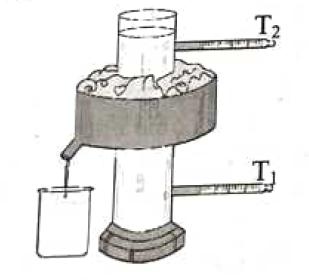
Observe the given diagram and answer the following questions:

Image

i. What is the name of the given apparatus?
ii. Which phenomenon is studied with the help of this apparatus?
iii. What are the final temperatures in thermometers $T _1$ and $T _2$ ?
iv. At what temperature the density of water is maximum?
v. Give one example of the above phenomenon in nature.
Why do we need to manage our natural resources?
Explain details on happening about blue whale game.
Draw ray diagrams to represent the nature, position and relative size of the image formed by a convex lens for the object placed:
  1. At $2F_1$
  2. between F and the optical centre $O$ of the lens.
Which of the above two cases shows the use of convex lens as a magnifying glass ? Give reasons for your choice.
What are the objectives of mock drill?
How will you explain the following statements with the help of the anomalous behaviour of water?
(1) In regions with cold climate, the aquatic plants and animals can survive even when the atmospheric temperature goes below 0 °C.
(2) In cold regions in winter the pipes for water supply break and even rocks crack.