The maximum velocity of a body undergoing $S.H.M$. is $0.2\,m/s$ and its acceleration at $0.1\,m$ from the mean position is $0.4\,m/s^2$. The amplitude of the $S.H.M.$ is .... $m$
Medium


Download our appand get started for free
Experience the future of education. Simply download our apps or reach out to us for more information. Let's shape the future of learning together!No signup needed.*
Similar Questions
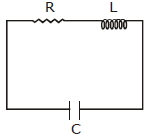
- 1An $LCR$ circuit is equivalent to a damped pendulum. In an $LCR$ circuit the capacitor is charged to $Q_0$ and then connected to the $L$ and $R$ as shown below.View Solution
If a student plots graphs of the square of maximum charge $( Q_{Max} ^2 )$ on the capacitor with time$(t)$ for two different values $L_1$ and $L_2 (L_1 > L_2)$ of $L$ then which of the following represents this graph correctly? (plots are schematic and not drawn to scale)
- 2The time period of a second's pendulum is $2\, sec$. The spherical bob which is empty from inside has a mass of $50\, gm$. This is now replaced by another solid bob of same radius but having different mass of $ 100\, gm$. The new time period will be .... $\sec$View Solution
- 3Consider the following statements. The total energy of a particle executing simple harmonic motion depends on itsView Solution
$(1)$ Amplitude $(2) $ Period $(3)$ Displacement
Of these statements
- 4A particle moves such that its acceleration $a$ is given by $a = - bx$, where $x$ is the displacement from equilibrium position and b is a constant. The period of oscillation isView Solution
- 5View SolutionIdentify the function which represents a periodic motion.
- 6In a linear simple harmonic motion $(SHM)$View Solution
$(A)$ Restoring force is directly proportional to the displacement.
$(B)$ The acceleration and displacement are opposite in direction.
$(C)$ The velocity is maximum at mean position.
$(D)$ The acceleration is minimum at extreme points.
Choose the correct answer from the options given below :
- 7In a linear simple harmonic motion $(SHM)$View Solution
$(A)$ Restoring force is directly proportional to the displacement.
$(B)$ The acceleration and displacement are opposite in direction.
$(C)$ The velocity is maximum at mean position.
$(D)$ The acceleration is minimum at extreme points.
Choose the correct answer from the options given below :
- 8The phase difference between two $SHM\,\,$ ${y_1}\, = \,10\,\sin \,\left( {10\pi t\, + \,\frac{\pi }{3}} \right)$ and ${y_2}\, = \,12\,\sin \,\left( {8\pi t\, + \,\frac{\pi }{4}} \right)$ at $t = 0.5\,s$ itView Solution
- 9A particle executes $S.H.M.$ with a period of $6$ second and amplitude of $3\, cm$. Its maximum speed in $cm/sec$ isView Solution
- 10Amplitude of a mass-spring system, which is executing simple harmonic motion decreases with time. If mass $=500\, g$, Decay constant $=20 \,g / s$ then ...... $s$ time is required for the amplitude of the system to drop to half of its initial value ? $(\ln 2=0.693)$View Solution