Question
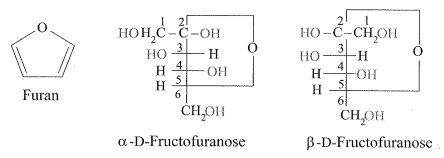
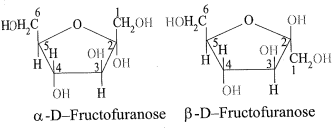
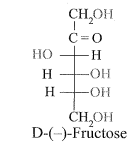
What is fructose? Explain the structure of fructose.
Generate a complete, print-ready paper with questions like this in minutes — across 16+ boards, with answer keys.
$6\text{FeSO}_4+3\text{H}_2\text{SO}_4+\text{KClO}_3\rightarrow\text{KCl}+3\text{Fe}_2(\text{SO}_4)_3+3\text{H}_2\text{O}$ is:
$-\frac{\text{d}[\text{A}]}{\text{dt}}=\text{k}[\text{A}][\text{B}]^2$
If B is present in large excess, the order of the reaction is:
I2 + 2e- → 2I- ; Eº = 0.54 V
Cl2 + 2e- → 2Cl- ; Eº = 1.36 V
Mn3+ +e- → Mn2+ ; Eº = 1.50 V
Fe3+ + e- → Fe2+ ; Eº = 0.77 V
O2 + 4H+ + 4e- → 2H2O ; Eº = 1.23 V
The following questions are multiple choice questions. Choose the most appropriate answer:$\text{I}_2+\text{KCl}\rightleftharpoons2\text{KI}+\text{Cl}_2$
Fe3+ + Mn2+ → Fe2+ + Mn3+
V2O5 + 5Ca → 2V + 5CaO
Reason: It is a type of bimolecular substitution reaction (SN2).
Reason: Sodium methoxide is a weak nucleophile.
Reason: Aryl halides do not undergo nucleophilic substitution easily.
Reason: With secondary alkyl halides, both substitution and elimination occur.
Reason: Williamson's synthesis is an example of nucleophilic substitution reaction.
$\text{Fe}^{2+}+\text{Ce}^{4+}\rightleftharpoons\text{Ce}^{3+}+\text{Fe}^{3+}$
(Given, $\text{E}^\circ_\frac{\text{Ce}^{4+}}{\text{Ce}^{3+}}=1.44\text{V}$ and $\text{E}^\circ_\frac{\text{Fe}^{3+}}{\text{Fe}^{2+}}=0.68\text{V}$)
Ag|Ag+ (satd. Ag2CrO4 soln) || Ag+ (0.1 M) | Ag
is 0.164V at 298 K, is:
 group.