Question
What is oogenesis? Give a brief account of oogenesis.

Answer

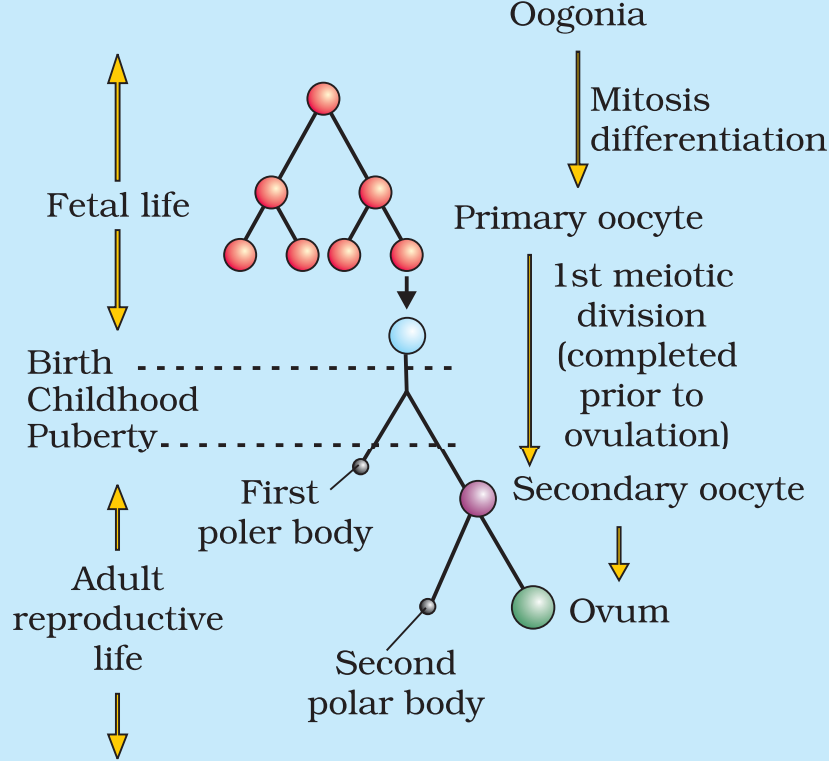
The process of the formation of a mature ovum in the ovary from the oogonia in females is known as oogenesis.
Germ cell of the female foetus divide to produce oogonia (gamete mother cell). No more oogonia are formed or added after birth. A diploid oogonium or egg mother cell increases in size and gets transformed into a diploid primary oocyte. This diploid primary oocyte undergoes meiosis or reductional division to form two unequal haploid cells. The smaller cell is known as the first polar body, while the larger cell is known as the secondary oocyte. This secondary oocyte undergoes meiosis II or equational division and gives rise to a second polar body and an ovum. Hence, in the process of oogenesis, a diploid oogonium produces a single haploid ovum while two or three polar bodies are produced.

Need a full question paper?

Generate a complete, print-ready paper with questions like this in minutes — across 16+ boards, with answer keys.
Start Generating Free

Similar questions

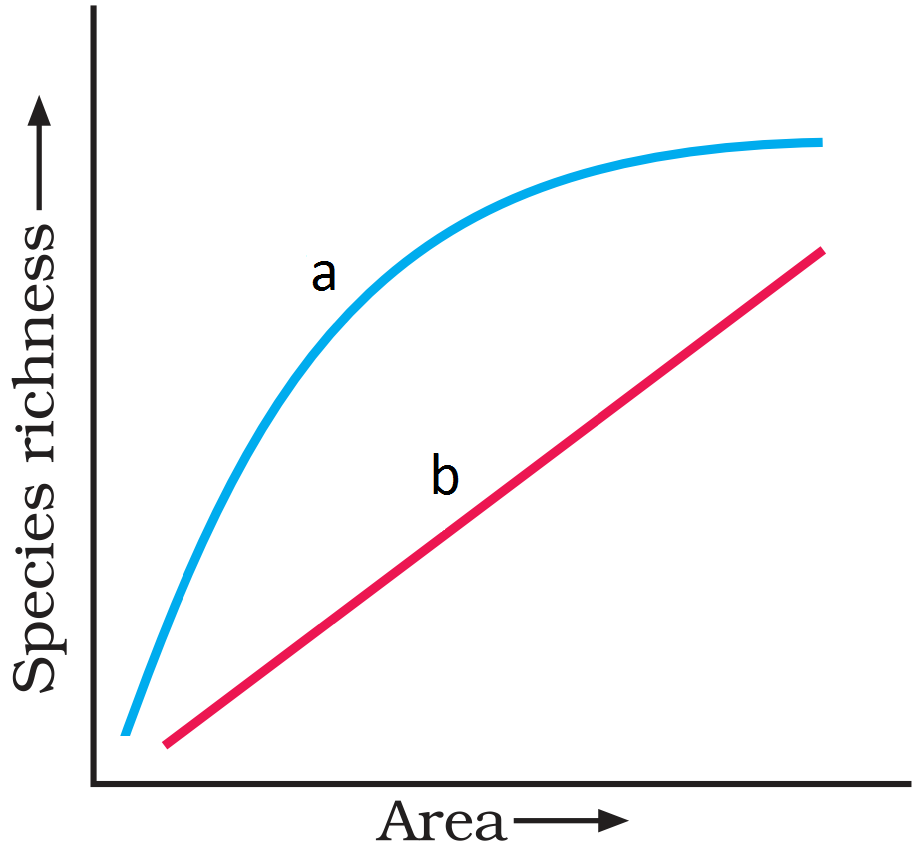
The graph shows species-area relationship:

  1. If b denotes the relationship on log scale-
  1. Describe a and b.
  2. How is slope represented? Give the normal range of slope.
  3. What kind of slope will be observed for frugivorous birds and mammals in a tropical forest?
  1. Species diversity of plants (22%) is much less than that of animals (72%). Analyze the reasons for greater diversity of animals as compared to plants.


With a neat, labelled diagram, describe the parts of a typical angiosperm ovule.
A garden pea plant bearing terminal, violet flowers, when crossed with another pea plant bearing axial, violet flowers, produced axial, violet flower and axial, white flowers in the ratio of 3 : 1. Work out the cross showing the genotypes of the parent pea plants and their progeny.
Drugs and alcohol give short-term 'relief and long term 'damages'. Discuss.
  1. Cancer is one of the most dreaded disease. Explain 'contact inhibition' and 'metastasis with respect to the disease.
  2. Name the group of genes that have been identified in normal cells that could lead to cancer. How do these genes cause cancer?
  3. Name any two techniques that are useful in detecting cancers of internal organs.
  4. Why are cancer patients often given a-interferon as part of the treatment?
Write the sequence of steps involved in the sequencing of genome of an organism.
Restriction enzymes are found in bacteria (and other prokaryotes). They recognize and bind to specific sequences of DNA, called restriction sites. Each restriction enzyme recognizes just one or a few restriction sites.
When it finds its target sequence, a restriction enzyme will make a double-stranded cut in the DNA molecule.
i. Write the palindromic nucleotide sequence for the following DNA segment.
5'-GAATTC-3'
ii. Name the restriction endonuclease that recognises this sequence.
iii. How are sticky ends produced? Mention their role.
Explain the mechanism of sex determination in human being.
What is decomposition? Describe the decomposition cycle in a terrestrial ecosystem. Assist your answer with diagramatic representation.
How is biodiversity important for ecosystem functioning?