Question
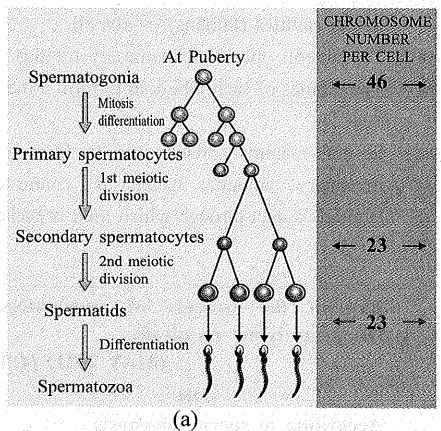
What is spermatogenesis? Briefly describe the process of spermatogenesis.###Explain the process of spermatogenesis. (Diagram is not required)###According to spermatogenesis (i) Development of sperm from primary spermatocytes. Explain it. (ii) Role of hormones which secreting from pituitary gland (iii) Structure of sperm (Diagram is not necessary)
Need a full question paper?

Generate a complete, print-ready paper with questions like this in minutes — across 16+ boards, with answer keys.

Start Generating Free

Similar questions

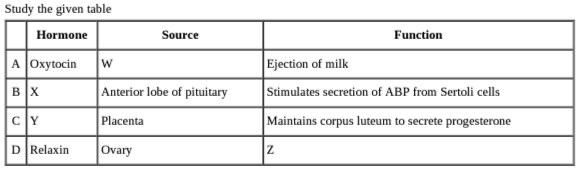
Read the following text carefully and answer the questions that follow:
Image
i. Identify the hormones X and Y respectively. (1)
ii. Label W and Z. (1)
iii. Name the hormones produced only during pregnancy in human female. Mention their source organs. (2)
OR
Name any two hormones which are secreted by placenta and are also present in a non-pregnant woman. (2)
Read the following text carefully and answer the questions that follow:
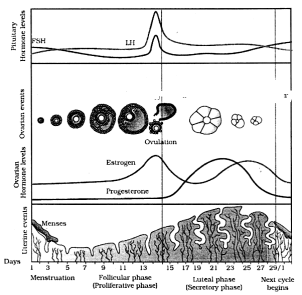
The reproductive cycle in female primates (e.g. monkeys, apes and human beings) is called the menstrual cycle. In human females, menstruation is repeated at an average interval of about 28/29 days, and the cycle of events starting from one menstruation till the next one is called the menstrual cycle Anita has show Diagrammatic presentation of various events during a menstrual cycle.
Image
i. What role do pituitary gonadotropins play during the follicular and ovulatory phases of the menstrual cycle? (1)
ii. The first half of the menstrual cycle is called the proliferative phase as well as the follicular phase. Give reason.(2)
iii. Why does corpus luteum stay active throughout pregnancy and in the absence of fertilization, is active only for 10-12 days?
OR
What happens to corpus luteum in human female if the ovum is (2)
a. fertilised,
b. not fertilised?
Read the following and answer any four questions from (i) to (v) given below:

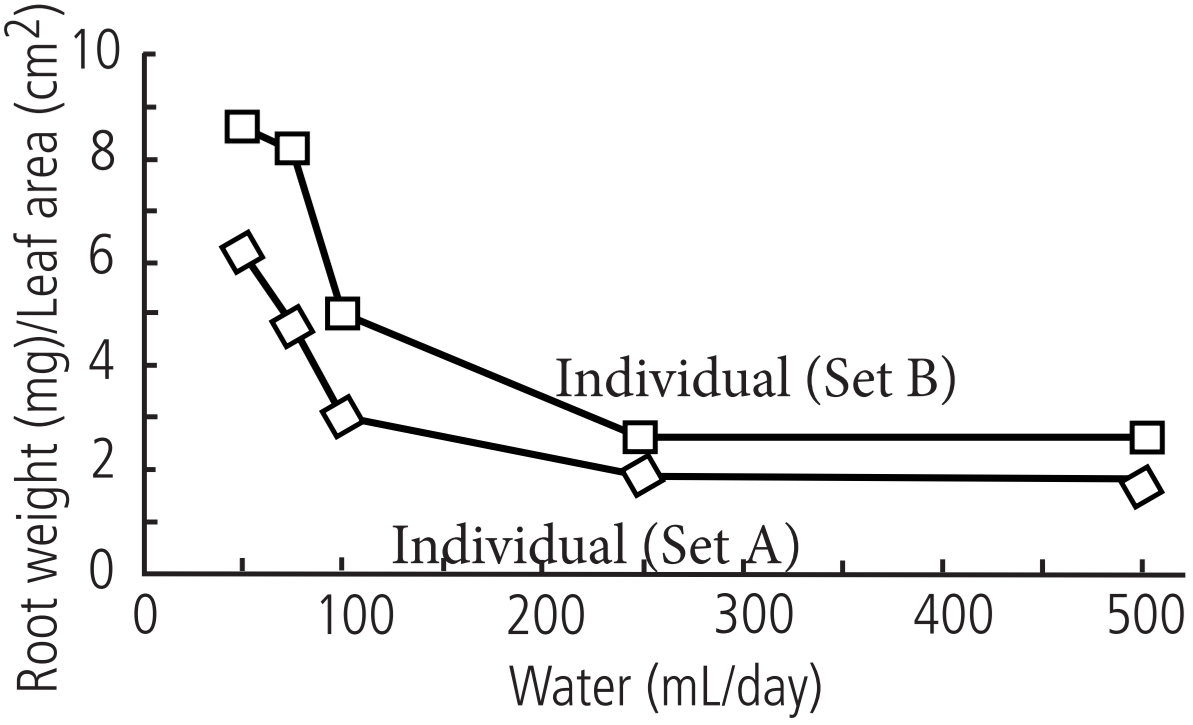
Ananya is a biologist, her research guide assigned project, i.e., to determine the effect ofin tra-specific competition on the growth of sapling of Eucalyptus. For this, she designed an experiment in which two sets of pots were used. ln the first set (set A) only I sapling was planted per pot and in the other set (set B) 16 saplings were planted per pot. To check for the effect of intra-specific competition on allocation of resources, a decreasing amount of water was added to each set. The results have been graphically indicated. Which of the following conclusions can indicated as follows:

  1. Which of the following statements can be concluded from the given study?
  1. More resources are allocated to the root during low water conditions.
  2. Competition for water among individuals of a population causes more root growth as compared to individuals who are growing alone.
  3. Lesser leaves are formed under low water conditions.
  4. Root growth is higher in individual grown singly as compared to individuals in populations.
  1. Which of the following associations is an example of competitions?
  1. Cuscuta and hedge plant.
  2. Balanus and Cathamalus.
  3. Cactus and moth.
  4. Orchid and mango.
  1. If '+' sign is assigned to beneficial interaction, '-' sign to detrimental and O sign to neutral interaction, then the population interaction of competition refers to:
  1. +, +
  2. -, -
  3. +, -
  4. +, 0
  1. lntraspecific competition is more severe due to:
  1. similar needs.
  2. similar adaptations.
  3. common resources.
  4. all of these.
  1. Assertion: Two members of a competing species may co-exist.

Reason: Different individuals of a species have different resource requirements.

  1. Both assertion and reason are true and reason is the correct explanation of assertion.
  2. Both assertion and reason are true but reason is not the correct explanation of assertion.
  3. Assertion is true but reason is false.
  4. Both assertion and reason are false.
Explain Competition as a population Interaction with suitable examples.
Microorganisms include bacteria, viruses, fungi and protozoa. In our mind, we presume, most of the time, that microbes are always harmful. Microbes are, of course, the causal agents of many infections diseases of plants and animals including humans but they also have lots of beneficial role. Lactic acid bacteria (LAB) are one of this kind of useful group. These are Gram positive, non-sporulating, either rod-shaped or spherical bacteria. They produce lactic acid in milk products as major metabolic end product of carbohydrate fermentation. LAB are considered as natural fermentors. Lactobacillus is a common LAB which converts lactose sugar of milk into lactic acid, that causes coagulation and partial digestion of milk protein casein. Milk is then changed into curd, yoghurt and cheese. Lactobacillus is also used in probiotics which have potentially beneficial effect on gut ecosystem of humans. Some other probiotic strain used belong to the Genus Bifidobacterium.

  1. Which of the following is not considered as microorganisms?
  1. Bacteriophage.
  2. Streptococcus.
  3. Porphyra.
  4. Staphylococcus.
  1. Select the incorrect option regarding the characteristics of lactic acid bacteria.
  1. They are rod-shaped or spherical.
  2. They are Gram positive.
  3. They take part in carbohydrate fermentation.
  4. They are acid intolerant.
  1. Which of the following is not a lactic acid producing bacteria?
  1. Streptococcus.
  2. Lactococcus.
  3. Saccharomyces.
  4. Enterococcus.
  1. Probiotics are:
  1. Gut friendly live bacteria.
  2. Acid balancing alternated bacteria.
  3. Beneficial amount of dead bacteria.
  4. Gram negative attenuated bacteria.
  1. Assertion: Lactobacillus bacteria do not retain crystal violet stain while staining.

Reason: Lactobacillus have a very thin layer of peptidoglycan layer in their cell wall.

  1. Both assertion and reason are true and reason is the correct explanation of assertion.
  2. Both assertion and reason are true but reason is not the correct explanation of assertion.
  3. Assertion is true but reason is false.
  4. Both assertion and reason are false.
Read the following text carefully and answer the questions that follow:
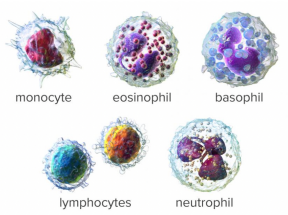
A lymphocyte isa type of white blood cell. Enlarge. Blood cells. Blood contains many types of cells: white blood cells (monocytes, lymphocytes, neutrophils, eosinophils, basophils, and macrophages), red blood cells (erythrocytes), and platelets. Blood circulates through the body in the arteries and veins.
Image
i. Why are the antigens called antibody-generating chemicals? (1)
ii. Which two types of lymphocytes are involved in immunity? (1)
iii. Give the common site of formation of two types of lymphocytes. (2)
OR
What is the site of differentiation of two types of lymphocytes? (2)
Read the following and answer any four questions from (i) to (v) given below:

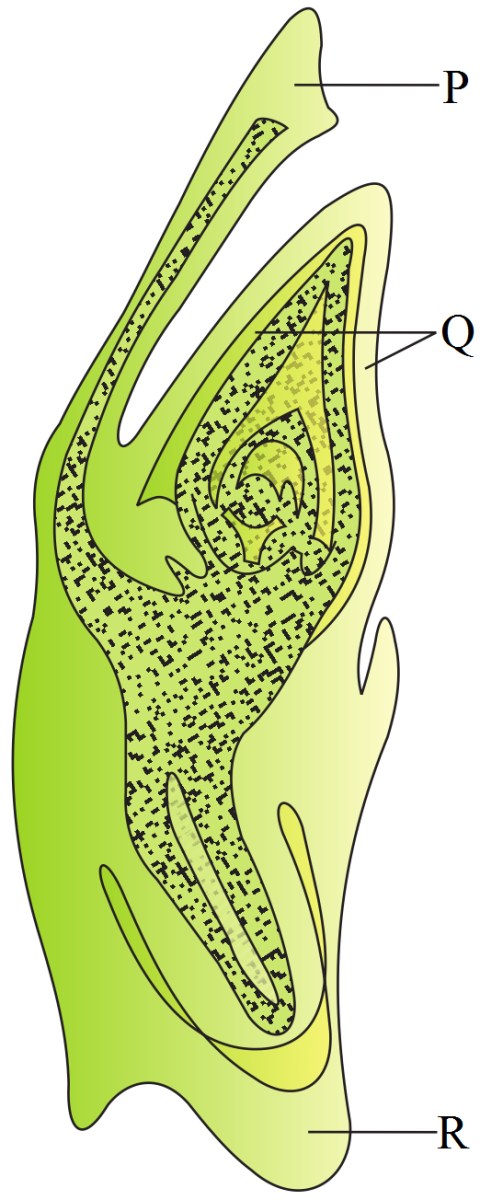
Embryo develops at the micropylar end of the embryo sac, where the zygote is situated. Most zygotes divided only after certain amount of endosperm is formed. The early stages of embryo development are similar in both monocotyledons and dicotyledons. The zygote gives rise to the proembryo and subsequently to the globular heart-shaped and mature embryo. A typical dicotyledonous embryo consists of an embryonal axis and two cotyledons. Embryo of monocotyledons possess only one cotyledon.

  1. True embryo develops as a result of fusion of:
  1. Two polar nuclei of embryo sac.
  2. An egg cell and a male gamete.
  3. Synergid and male gamete.
  4. A male gamete and antipodals.
  1. Refer to the given diagram of the embryo of an angiospermous plant with parts labelled P, Q and R. Select the correct statement(s) regarding this.

  1. Part 'P' supplies nutrition to the developing embryo.
  2. Part 'Q' is the protective sheath of radicle and root cap.
  3. Part 'R' is the protective sheath of shoot apex and leaf primordia.
  4. The embryo shown in the diagram is present in members of Family Poaceae.
  1. (IV) only.
  2. (II) and (III) only.
  3. (I) and (IV) only.
  4. (I), (II), (III) and (IV).
  1. Which of the given statements are true?
  1. During the development of a dicot embryo, heart-shaped embryo is followed by globular embryo.
  2. The part of embryonal axis above the level of cotyledons is epicotyl, while the part below the level of cotyledons is hypocotyl.
  3. Monocot seeds possess a single cotyledon, represented by scutellum.
  1. (I) and (II).
  2. (II) and (III).
  3. (I) and (III).
  4. (I), (II) and (III).
  1. Consider the following parts of an embryonal axis of a dicot seed.
  1. Hypocotyl.
  2. Epicotyl.
  3. Radicle.
  4. Plumule.

In which of the following the above parts are correctly arranged from top to base?

  1. (III) → (I) → (II) → (IV).
  2. (II) → (I) → (III) → (IV).
  3. (IV) → (II) → (I) → (III).
  4. (III) → (IV) → (II) → (I).
  1. In grass family, the cotyledon, is called:
  1. Epiblast.
  2. Plumule.
  3. Scutellum.
  4. Perisperm.
Read the following and answer any four questions from (i) to (v) given below:

Intrauterine devices are most widely accepted methods of contraception. These are used by females and are inserted by doctor or nurses in the uterus through vagina. However, these devices are not recommended for those who eventually intend to conceive.

  1. How does CuT prevent conception?
  1. Cu ions make uterus unsuitable for implantation.
  2. Cu ions make cervix hostile to the sperms.
  3. Cu ions suppress sperms motility.
  4. Cu ions inhibit ovulation.
  1. Which of the following IUDs makes uterus unsuitable for implantation?
  1. LNG-20.
  2. Multiload 375.
  3. Cu7.
  4. Lippes loop.
  1. Identify the correct statement for IUDs.
  1. They slowly release synthetic progesterone in the body.
  2. They increase phagocytosis of sperms within the uterus.
  3. They block entry of sperms through the cervix.
  4. Both (b) and (c).
  1. Select the correct matched pair.
  1. Hormone releasing IUD - LNG-20.
  2. Non-medicated IUD - Progestasert.
  3. Copper releasing IUD - Lippes loop.
  4. None of these.
  1. Assertion: IUDs can cause excess menstrual bleeding and pain.

Reason: IUDs can perforate uterus.

  1. Both assertion and reason are true, and reason is the correct explanation of assertion.
  2. Both assertion and reason are true, but reason is not the correct explanation of assertion.
  3. Assertion is true, but reason is false.
  4. Both assertion and reason are false.
Describe: Genetic engineered insulin
Read the following and answer any four questions from (i) to (v) given below:

Over population causes number of family problems. Strategies like birth control methods help to control population explosion. Natural methods of birth control do not involve medications or devices to prevent pregnancy, but rather rely on behavioural practices and/ or making observations about menstrual cycle.

  1. Which method helps in contraception by temporary absence of sex?
  1. Coitus interruptus.
  2. Withdrawal method.
  3. Rhythm method.
  4. Lactational amenorrhea method.
  1. Assertion: The effectiveness of coitus interruptus method is limited.

Reason: Some sperms may pass into vagina before ejaculation.

  1. Both assertion and reason are true, and reason is the correct explanation of assertion.
  2. Both assertion and reason are true, but reason is not the correct explanation of assertion.
  3. Assertion is true, but reason is false.
  4. Both assertion and reason are false.
  1. Why is lactational amenorrhea effective for about 4-5 months after parturition?
  1. Ovulation occurs on about the 14th day of menstruation.
  2. Ovulation does not occur during intense lactation.
  3. This method inhibits mobility of sperms.
  4. Both (b) and (c).
  1. Which fact is not the basis of periodic absence method of birth control?
  1. Ovum remains alive for about 1-2 days.
  2. Ovulation occurs on about 14th day of menstruation.
  3. Sperms survive for about 3 days.
  4. Alteration in uterine endometrium.
  1. On which days of menstrual cycle should coitus be avoided to prevent fertilisation?
  1. 10-17
  2. 6-13
  3. 1-5
  4. 15-28