MCQ
When subjected to a transverse electric field, cathode rays move
  • A
    Down the potential gradient
  • Up the potential gradient
  • C
    Along a hyperbolic path
  • D
    Along a circular path

Answer

Correct option: B.
Up the potential gradient
b
(b)In an electric field, a force opposite to the direction of electric field acts on negatively charged particles (i.e. from lower potential to higher potential).

Need a full question paper?

Generate a complete, print-ready paper with questions like this in minutes — across 16+ boards, with answer keys.
Start Generating Free

Similar questions

A double convex lens has focal length $25\; \mathrm{cm}$. The radius of curvature of one of the surfaces is double of the other. Find the radii If the refractive index of the material of the lens is $1.5 $
What is the modulation index of an over modulated wave
Consider a neutral conducting sphere. A positive point charge is placed outside the sphere. The net charge on the sphere is then,
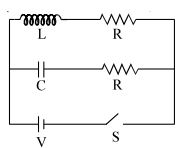
In the circuti shown in the figure,$R = \sqrt {\frac{L}{C}} $ Switch $S$ is closed at time $t = 0$. The current through $C$ and would be equal after a time $t$ equal to:
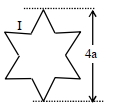
A symmetric star conducting wire loop is carrying a steady state current $\mathrm{I}$ as shown in figure. The distance between the diametrically opposite vertices of the star is $4 a$. The magnitude of the magnetic field at the center of the loop is
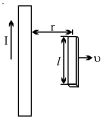
$A$ conducting rod moves with constant velocity $\upsilon$ perpendicular to the long, straight wire carrying a current $I$ as shown compute that the $emf$ generated between the ends of the rod.
The colour sequence in a carbon resistor is red, brown, orange and silver. The resistance of the resistor is
If an electron is going in the direction of magnetic field $\overrightarrow B $ with the velocity of $\overrightarrow {v\,} $ then the force on electron is
The frequency of light ray having the wavelength $3000 Å$ is
A metal ring is held horizontally and bar magnet is dropped through the ring with its length along the axis of the ring. The acceleration of the falling magnet is