MCQ
When was Van de Graff generator invented and by whom?
- A1944, Robin Van de Graff
- B1932, Robert Van de Graff
- C1933, Robin Van de Graff
- D1933, Robert Van de Graff
Explanation:
Van de Graff generator was invented by Robert Jemison Van de Graff on November 28, 1933. Robert Jemison invented the Van de Graff generator, which is a kind of high-voltage electrostatic generator that accelerates particles, while he was doing his PhD in Princeton University.
Generate a complete, print-ready paper with questions like this in minutes — across 16+ boards, with answer keys.
A 20F capacitor is charged to 5V and isolated. It is then connected in parallel with an uncharged 30F capacitor. The decrease in the energy of the system will be
|
(a) 25 J |
(b) 200 J |
(c) 125 J |
(d) 150 J |
What is the respective number of α and β particles emitted in the following radioactive decay 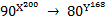
|
(a) 6 and 8 |
(b) 8 and 8 |
(c) 6 and 6 |
(d) 8 and 6 |
Two long parallel wires P and Q are both perpendicular to the plane of the paper with distance 5 m between them. If P and Q carry current of 2.5 amp and 5 amp respectively in the same direction, then the magnetic field at a point half way between the wires is
|
(a) |
(b) |
(c) |
(d) |
If a diamagnetic solution is poured into a U-tube and one arm of this U-tube placed between the poles of a strong magnet with the meniscus in a line with the field, then the level of the solution will
|
(a) Rise |
(b) Fall |
(c) Oscillate slowly |
(d) Remain as such |
In a nuclear fission reaction
|
(a) Two light nuclei combine to produce a heavier nucleus |
|
(b) A light nucleus bombarded by thermal neutrons breaks up |
|
(c) A heavy nucleus bombarded by thermal neutrons breaks up |
|
(d) A heavy nucleus breaks up by itself |


