MCQ
Which of the following about potential difference between any two points is true?
  1. It depends only on the initial and final position.
  2. It is the work done per unit positive charge in moving from one point to other.
  3. It is more for a positive charge of two units as compared to a positive charge of one unit.
    • A
      I only.
    • B
      II only.
    • C
      I and II.
    • D
      I, II and III.

    Answer

    1. I and II.

    Need a full question paper?

    Generate a complete, print-ready paper with questions like this in minutes — across 16+ boards, with answer keys.

    Start Generating Free

    Similar questions

    The measurement of voltmeter in the following circuit is

    (a) 2.4 V 

    (b) 3.4 V

    (c) 4.0 V  

    (d) 6.0 V

    Your are given three equal resistances. In how many combinations can they be arranged?
    To maintain a steady current through the conductor, some external device must do work. What does the external device provide?

    A lens of focal power 0.5 D is

    (a) A convex lens of focal length 0.5 m

    (b) A concave lens of focal length 0.5 m

    (c) A convex lens of focal length 2 m

    (d) A concave lens of focal length 2 m

    Broadcasting antennas are generally

    (a) Omnidirectional type

    (b) Vertical type

    (c) Horizontal type

    (d) None of these

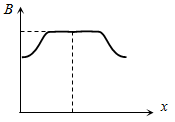
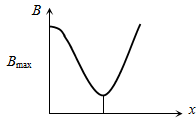
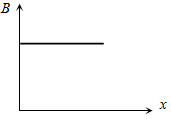
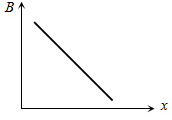
    The correct curve between the magnetic induction (B) along the axis of a long solenoid due to current flow i in it and distance x from one end is

    (a)

    (b)

    (c)

    (d)

    Find the true statement.
    Beta particle An unknown particle is being studied in a magnetic field of variable intensity and direction. When the magnetic field is turned off, the particle is observed to move toward the earth. When the magnetic field is turned on, the particle is observed to continue to move toward the earth, no matter the strength or the direction of the magnetic field. Which of the particles listed below is most likely the unknown particle?

    A light wave has a frequency of 4  Hz and a wavelength of 5  meters in a medium. The refractive index of the medium is

    (a) 1.5

    (b) 1.33

    (c) 1.0

    (d) 0.66

    A liquid can easily change its shape but a solid can not because.
    1. The density of a liquid is smaller than that of a solid.
    2. The forces between the molecules is stronger in solid than in liquids.
    3. The atoms combine to form bigger molecules in a solid.
    4. The average separation between the molecules is larger in solids.