MCQ
Which of the following group is diamagnetic?
- ACopper, hydrogen, silver.
- BCopper, hydrogen, argon.
- CHydrogen, oxygen, argon.
- DCopper, silver, oxygen.
Explanation:
Diamagnetic substances are those which are freebly repelled by the magnetic field.
$\therefore$ Copper, Hydrogen, Silver are diamagnetic as their atoms have net magnetic dipole moment zero.
Generate a complete, print-ready paper with questions like this in minutes — across 16+ boards, with answer keys.
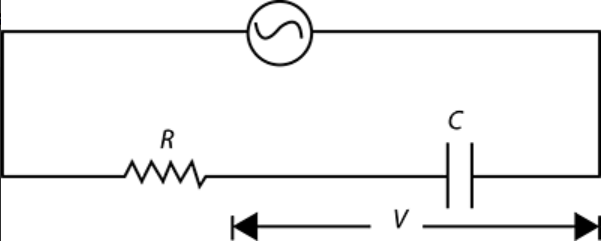
If scattering particles are 56 for 90° angle then this will be at 60° angle
|
(a) 224 |
(b) 256 |
(c) 98 |
(d) 108 |
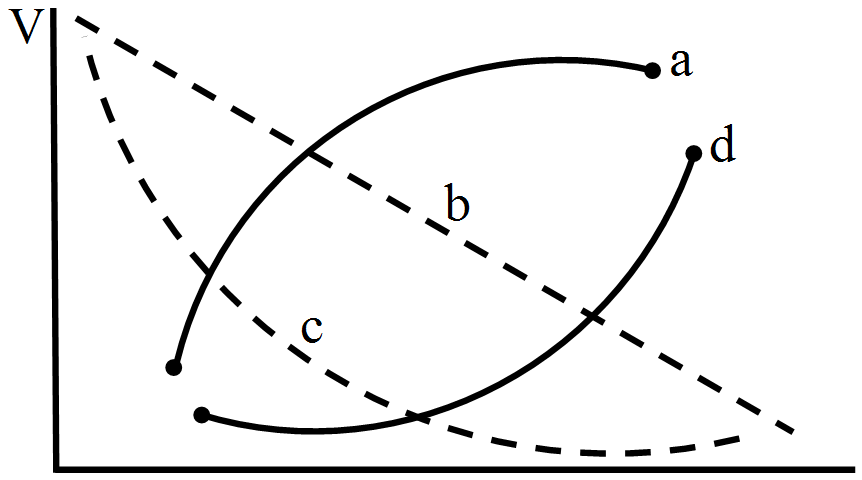
Hubble showed that the universe as a whole is expanding and the distant stars are receding from us. The spectral line from a star, when compared with the corresponding line from an source will then show
|
(a) A shift in frequency towards the red end |
|
(b) A shift in frequency towards the violet end |
|
(c) No shift in frequency at all |
|
(d) A shift in frequency towards the violet end as well as a decrease in intensity |
P-type semiconductors are made by adding impurity element
|
(a) As |
(b) P |
(c) B |
(d) Bi |