MCQ
Which of the following is not thermodynamical function
  • A
    Enthalpy
  • Work done
  • C
    Gibb's energy
  • D
    Internal energy

Answer

Correct option: B.
Work done
b
(b)Work done is not a thermodynamical function.

Need a full question paper?

Generate a complete, print-ready paper with questions like this in minutes — across 16+ boards, with answer keys.

Start Generating Free

Similar questions

A pipe open at both ends produces a note of frequency $f‌‌‌_1$. When the pipe is kept with $\frac{3}{4}$th of its length it water, it produced a note of frequency $f_2$. The ratio $\frac{{{f_1}}}{{{f_2}}}$ is
A body of mass $m_1$ moving with an unknown velocity of $v_1 \hat i$ undergoes a collinear collision with a body of mass $m_2$ moving with a velocity $v_2 \hat i$ . After collision $m_1$ and $m_2$ move with velocities of $v_3 \hat i$ and $v_4 \hat i$ respectively. If $m_2 = 0.5\, m_1$ and $v_3 = 0.5\, v_1$ then $v_1$ is:
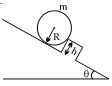
Find minimum height of obstacle so that the sphere can stay in equilibrium. 
A man is watching two trains, one leaving and the other coming with equal speed of $4\,m/s$. If they sound their whistles each of frequency $240\, Hz$, the number of beats per sec heard by man will be equal to (velocity of sound in air $= 320\, m/s$)
In producing a pure spectrum, the incident light is passed through a narrow slit placed in the focal plane of an achromatic lens because a narrow slit:
  1. Produces less diffraction.
  2. Increases intensity.
  3. Allows only one colour at a time.
  4. Allows a more parallel beam when it passes through the lens.
The horizontal range of a projectile is $4\sqrt 3 $ times its maximum height. Its angle of projection will be    ......... $^o$
A device used for investigating the vibration of a fixed string or wire is
A man weighs $80\,kg.$ He stands on a weighing scale in a lift which is moving upwards with a uniform acceleration of $5m/{s^2}.$ What would be the reading on the scale. $(g = 10m/{s^2})$  ............ $N$
The pressure exerted by a gas is dependent on its density:
In a p-n junction with open ends:
  1. There is no systematic motion of charge carriers.
  2. Holes and conduction electrons systematically go from the p-side to the n-side and from the n side to the p-side respectively.
  3. There is no net charge transfer between the two sides.
  4. There is a constant electric field near the junction.