Question types

Integrals and it's Applications question types

82 questions across 5 question groups — pick any mix to generate a Applied Maths paper with step-by-step answer keys.

82
Questions
5
Question groups
5
Question types
Sample Questions

Integrals and it's Applications questions

One sample from each question group in this chapter. Select any group above to see the full set with answer keys.

Q 1MCQ1 Mark
If the supply function for a commodity is p = 4 + x and 12 units of goods are sold, then the producer's surplus is given by:
  • A
    70
  • 72
  • C
    12
  • D
    48

Answer: B.

View full solution
Q 2MCQ1 Mark
If the demand function for a commodity is $p=35-2 x-x^2$ Then the consumer's surplus at equilibrium price $p_0=20$ is given by:
  • A
    20
  • 27
  • C
    25
  • D
    35

Answer: B.

View full solution
Q 3MCQ1 Mark
The area of the region bounded by parabola $y^2=x$and the straight line 2y = x is:
  • A
    $\frac{4}{3}$ sq. units
  • B
    1 sq. units
  • C
    $\frac{2}{3}$ sq. units
  • D
    $\frac{1}{3}$ sq. units
View full solution
Q 4MCQ1 Mark
The area of the region bounded by the curve $x^2=4 y$ and the straight-line $x=4 y-2$ is:
  • A
    $\frac{3}{8}$ sq. units
  • B
    $\frac{5}{8}$ sq. units
  • C
    $\frac{7}{8}$ sq. units
  • $\frac{9}{8}$ sq. units

Answer: D.

View full solution
Read the following text and answer the following questions on the basis of the same
Mohan is the student of class XII of Sunshine School. In the mathematics class, teacher defines the method for evaluation of definite integral, she said, To evaluate the definite integral $\underset{\pi}{\equiv} f(x) d x$ a continuous function f(x) defined on [a, b], we may use the following algorithm.
Step 1: Find the indefinite integral $\stackrel{b}{\equiv} f(x) d x$
Let this be P(x) There is no need to keep the constant of integration.
Step 2: Evaluate $\phi(b)$ and $\phi(a)$.
Step 3: Calculate $\phi(b)-\phi(a)$.
The number obtained in step 3 is the value of definite integral $\int_a^b f(x) d x$

Q.1. Evaluate: $\int_0^1 \frac{1}{\sqrt{1+x}+\sqrt{x}} d x$
Q.2. If $\int_1^a\left(3 x^2+2 x+1\right) d x=1$, find real values of $a$.
View full solution
View full solution
Q 113 Marks Question3 Marks
If the demand curve is given by $D(x)=50-0.06 x^2$. Find the surplus or profit of the consumers if the level of sale amounts to twenty units.
View full solution
The demand and supply function of an article are $D(q)=1000-0.4 q^2$ and $S(q)=42 q$. Find the consumer's surplus and producer's surplus at equilibrium price.
View full solution
The demand and supply function of a commodity are $P_d=18-2 x-x^2$ and $P_s=2 x-3$. Find the consumer's surplus and producer's surplus at equilibrium price .
View full solution
Suppose the demand for the certain product is given by $p=-0.01 x^2-0.1 x+6$, where $p$ is the unit price given in rupees and x is the quantity demanded per month given in the units of 1000. The unit market price for the product is ₹ 4 per unit
(a) Find the quantity demanded at the given price.
(b) Find the consumer's surplus if the market price for the product is ₹ 4 per unit.
View full solution
View full solution
Read the following text and answer the following questions on the basis of the same:
The demand function for a popular make of 12- speed bicycle is given by $p= D (x)=-0.001 x^2$= 250, where p is the unit price in Rupees and x is the quantity demanded in units of a thousands. The supply function for the same product is given by p $= S (x)=0.0006 x^2+0.02 x+100$,where p is the unit price in Rupees and x is the quantity supplied in units of a thousands.

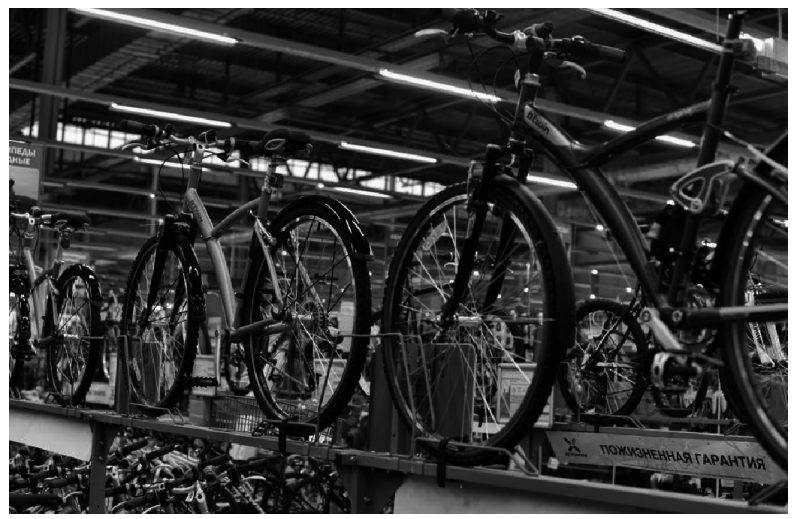
Image

Q.1. If at equilibrium, curves of demand function and supply function intersect at (x, y), then what does the point of intersection represents?
(A) x = equilibrium quantity, y = equilibrium price
(B) x = equilibrium price, y = equilibrium quantity
(C) x = equilibrium demand, equilibrium price
(D) x = equilibrium supply, y = equilibrium demand

Q.2. Find point of intersection.
(A) (300, 160)
(B) (160,300)
(C) (300,300)
(D) (160, 160)

Q.3. Formula for Consumer's Surplus is:
(A) $C S=\int_0^{Q_e} D(x) d x+Q_e \cdot P_e$
(B) CS $=\int_0^{Q_e} D(x) d x-Q_e \cdot P_e$
(C) $C S=-\int_0^{Q_e} D(x) d x-Q_e \cdot P_e$
(D) $CS =-\int_0^{Q_e} D(x) d x+Q_e \cdot P_e$

Q.4. Formula for Producer's Surplus is:
(A) $P S=Q_e \cdot P_e-\int_0^{Q_e} D(x) d x$
(B) $P S=Q_e \cdot P_e-\int_0^{Q_e} S(x) d x$
(C) $P S=Q_c \cdot P_e+\int_0^{Q_e} S(x) d x$
(D) $P S=-Q_e \cdot P_e+\int_0^{Q_e} D(x) d x$
View full solution
View full solution
View full solution

Generate a Integrals and it's Applications paper free

Pick question groups from the list above, set marks and difficulty, and export a branded PDF with step-by-step answer keys. First 3 chapters free — no signup.

Download App