Question 15 Marks
Does the escape speed of a body from the earth depend on (a) the mass of the body, (b) the location from where it is projected, (c) the direction of projection, (d) the height of the location from where the body is launched?
Answer
View full question & answer→- No, from the formula $\upsilon_\text{e}=\sqrt{\frac{2\text{GM}}{\text{R}}},$ it is clear that escape velocity does not depend on the mass of the body.
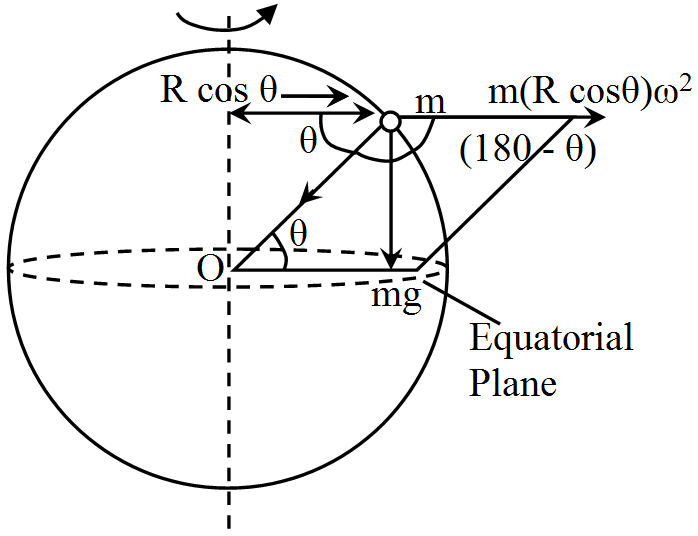
- The escape velocity depends upon the value of gravitational potential at the point from where the body is projected. The gravitational potential energy of body $\text{E}=-\frac{\text{GMm}}{\text{R}}$ is slightly different at different points ($\because$ the earth is not a perfect sphere and hence R is different ai different points). Because of this escape velocity depend slightly on the latitude of the place from where the body is projected.
- The escape velocity of a body does not depend upon its direction of projection.
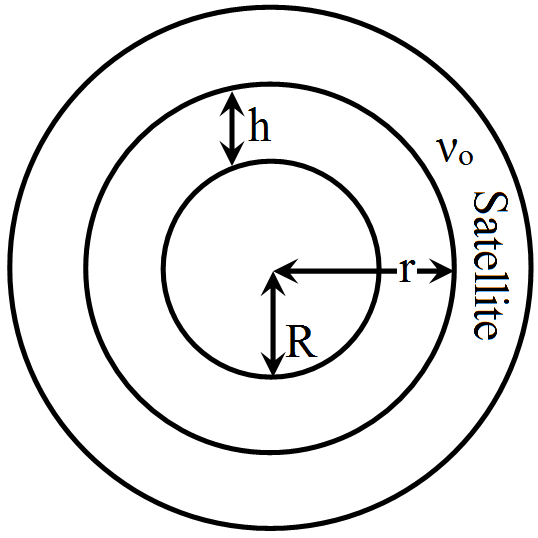
- Since the gravitational potential energy at a point at the height h from the earth surface is $\frac{\text{GMs}}{\text{(R+h)}},$ the escape velocity will be different for different values of h.
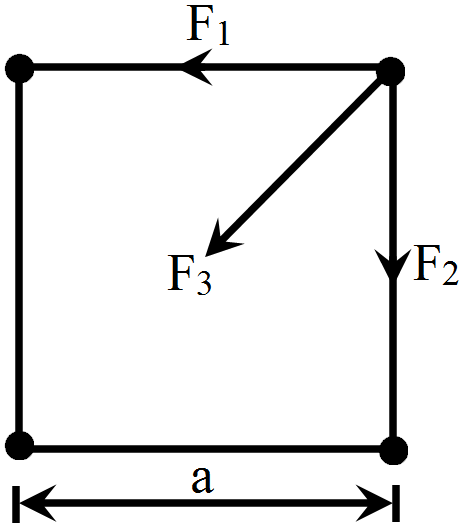

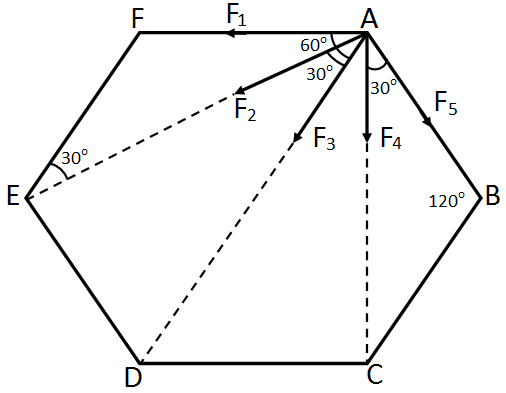 Force on mass m at A due to mass m at F is,