A function is represented by equation
$y = A\,\cos \,\omega t\,\cos \,2\omega t + A\,\sin \,\omega t\,\sin \,2\omega t$.
Than the nature of the function is
Medium


Download our appand get started for free
Experience the future of education. Simply download our apps or reach out to us for more information. Let's shape the future of learning together!No signup needed.*
Similar Questions
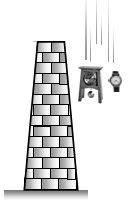
- 1A man having a wrist watch and a pendulum clock rises on a $TV$ tower. The wrist watch and pendulum clock per chance fall from the top of the tower. ThenView Solution
- 2Two simple pendulum first of bob mass $M_1$ and length $L_1$ second of bob mass $M_2$ and length $L_2$. $M_1 = M_2$ and $L_1 = 2L_2$. If these vibrational energy of both is same. Then which is correctView Solution
- 3A particle is vibrating in a simple harmonic motion with an amplitude of $4\, cm.$ At what displacement from the equilibrium position, is its energy half potential and half kineticView Solution
- 4A particle of mass $m$ performs $SHM$ along a straight line with frequency $f$ and amplitude $A.$View Solution
- 5There is a simple pendulum hanging from the ceiling of a lift. When the lift is stand still, the time period of the pendulum is $T$. If the resultant acceleration becomes $g/4,$ then the new time period of the pendulum isView Solution
- 6Two springs have spring constants ${K_A}$ and ${K_B}$ and ${K_A} > {K_B}$. The work required to stretch them by same extension will beView Solution
- 7Two simple harmonic motions $y_1 = A \sin \omega t$ and $y_2 =A \cos \omega t$ are superimposed on a particle of mass $m.$ The total mechanical energy of the particle is :View Solution
- 8The displacement y of a particle executing periodic motion is given by $y = 4{\cos ^2}(t/2)\sin (1000t)$. This expression may be considered to be a result of the superposition of ........... independent harmonic motionsView Solution
- 9The displacement of a particle executing periodic motion is given by :View Solution
$y = 4cos^2\,(t/2)sin\,(1000t)$
This expression may be considered to be a result of superposition of - 10At a given point of time the value of displacement of a simple harmonic oscillator is given as $y = A \cos \left(30^{\circ}\right)$. If amplitude is $40\,cm$ and kinetic energy at that time is $200\, J$, the value of force constant is $1.0 \times 10^{ x }\,Nm ^{-1}$. The value of $x$ is ......View Solution