A heater coil connected to a supply of a $220\, V$ is dissipating some power ${P_1}.$ The coil is cut into half and the two halves are connected in parallel. The heater now dissipates a power ${P_2}.$ The ratio of power ${P_1}\,\,:\,\,{P_2}$ is
Medium


Download our appand get started for free
Experience the future of education. Simply download our apps or reach out to us for more information. Let's shape the future of learning together!No signup needed.*
Similar Questions
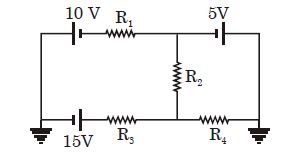
- 1In the circuit shown, current through $R_2$ is zero. If $R_4 = 2\,\Omega $ and $R_3 = 4\,\Omega $ , current through $R_3$ will be ................. $\mathrm{A}$View Solution
- 2An electric toaster has resistance of $60\ \Omega$ at room temperature $\left(27^{\circ} \mathrm{C}\right)$. The toaster is connected to a $220 \mathrm{~V}$ supply. If the current flowing through it reaches $2.75 \mathrm{~A}$, the temperature attained by toaster is around : (if $\alpha=2 \times 10^{-4} /{ }^{\circ} \mathrm{C}$ )View Solution
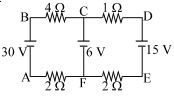
- 3View SolutionThe figure shows a network of four resistances and three batteries Choose the correct alternative
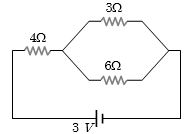
- 4The potential drop across the $3$ $\Omega$ resistor is ............... $V$View Solution
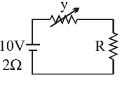
- 5In the figure shown the power generated in $y$ is maximum when $y = 5\,\Omega $. Then $R$ isView Solution
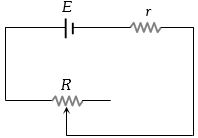
- 6A battery of $e.m.f.$ $E$ and internal resistance $r$ is connected to a variable resistor $R$ as shown here. Which one of the following is trueView Solution
- 7View SolutionWhich of the following statement is correct
- 8If two bulbs of wattage $25$ and $100$ respectively each rated at $220\, volt$ are connected in series with the supply of $440\, volt$, then which bulbs will fuseView Solution
- 9A student has $10$ resistors of resistance ‘$r$’. The minimum resistance made by him from given resistors isView Solution
- 10A copper wire has a square cross-section, $2.0\, mm$ on a side. It carries a current of $8\, A$ and the density of free electrons is $8 \times {10^{28}}\,{m^{ - 3}}$. The drift speed of electrons is equal toView Solution