Question
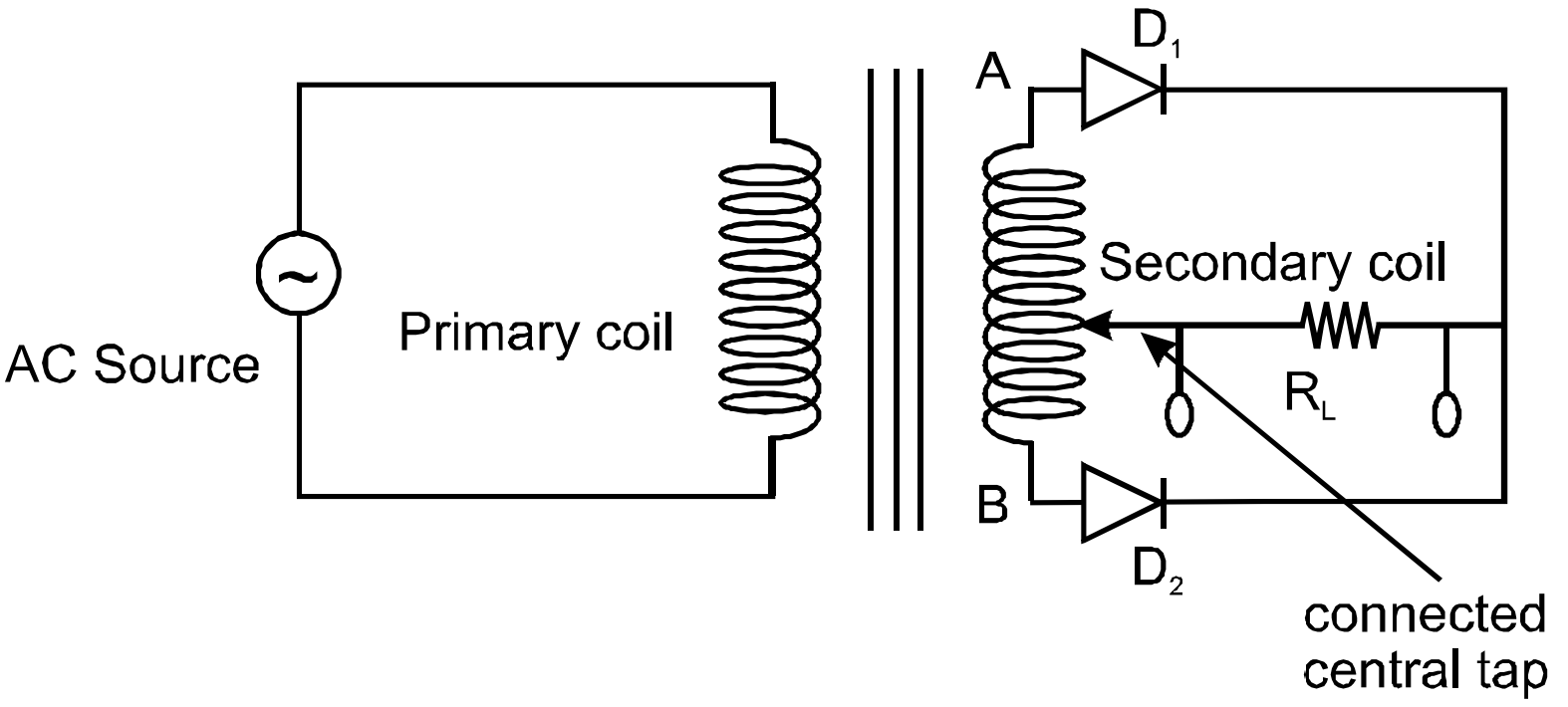
  1. A student wants to use two p-n junction diodes to convert alternating current into direct current. Draw the labelled circuit diagram she would use and explain how it works.
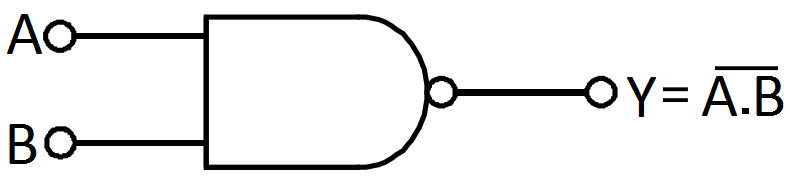
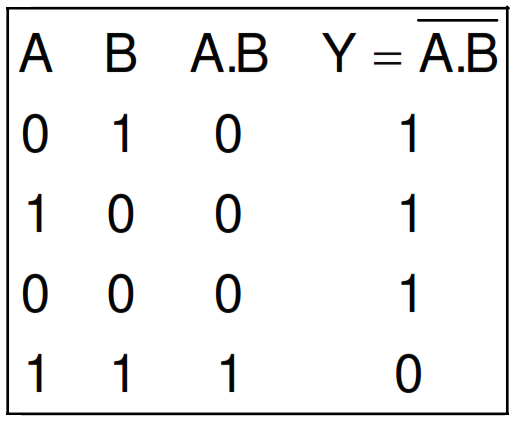
  2. Give the truth table and circuit symbol for NAND gate.

Need a full question paper?

Generate a complete, print-ready paper with questions like this in minutes — across 16+ boards, with answer keys.
Start Generating Free

Similar questions

The average translational kinetic energy of air molecules is 0.040eV (1eV = 1.6 × 10-19J). Calculate the temperature of the air. Boltzmann constant k = 1.38 × 10-23JK-1.
Derive the formula for conductivity and resistivity of metals by obtaining the relationship between drift velocity and current density.
  1. Using de Broglie's hypothesis, explain with the help of a suitable diagram, Bohr's second postulate of quantization of energy levels in a hydrogen atom.
  2. The ground state energy of hydrogen atom is - 13.6 eV. What are the kinetic and potential energies of the electron in this state?
The drift current in a reverse-biased p-n junction increases in magnitude if the temperatu,re of the junction is increased. Explain this on the basis of creation of hole-electron pairs.
Show that the wavelength of electro-magnetic radiation is equal to the de-Broglie wavelength of its quantum (photon).
Suppose white light falls on a double slit but one slit is covered by a violet filter (allowing $\lambda=400\text{nm}$). Describe the nature of the fringe pattern observed.
The fission properties of $^{239}_{94}\text{Pu}$ are very similar to those of $^{235}_{92}\text{U}.$ The average energy released per fission is 180 MeV. How much energy, in MeV, is released if all the atoms in 1 kg of pure $^{239}_{94}\text{Pu}$ undergo fission?
  1. Write three characteristic properties of nuclear force.
  2. Draw a plot of potential energy of a pair of nucleons as a function of their separation. Write two important conclusions that can be drawn from the graph.
Compare the properties of soft iron and steel.
(a) Which of the following can be a source for origin of electromagnetic waves? Give reason.
(i) A charge moving with constant speed
(ii) Charge undergoing circular motion
(iii) Fixed charge.
(b) Name that part of electromagnetic spectrum with which waves of frequency
(i) $10^{20} Hz$,
(ii) $10^9 Hz$ associated.