Question
Define the term ‘linearly polarised light’.
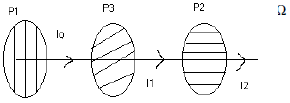
When’ does the intensity of transmitted light become maximum, when a polaroid sheet is rotated between two crossed polaroids?

Answer

When the vibrations of the electric field vector $(\overrightarrow{\text{E}})$ are confined to only one direction then light is called linearly polarized light.

Intensity of transmitted light is maximum when the Polaroid sheet makes an angle of 450 with the pass axis.

Alternate Answer

Need a full question paper?

Generate a complete, print-ready paper with questions like this in minutes — across 16+ boards, with answer keys.

Start Generating Free

Similar questions

Obtain Faraday's law of induction explaining Faraday's experiments regarding electric induction with reference to magnetic flux.
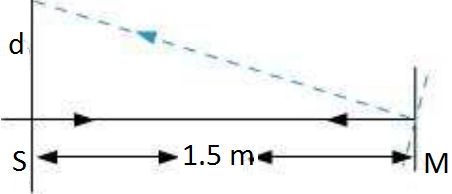
Light incident normally on a plane mirror attached to a galvanometer coil retraces backwards. A current in the coil produces a deflection of 3.5° of the mirror. What is the displacement of the reflected spot of light on a screen placed 1.5 m away?

Sunita and her friends went to an exhibition. The guard standing there asked them to pass through a metal detector. Sunita's friends were first afraid but when Sunita told them the reason and explain its working.
Answer the following questions :
(a) State the principle on which metal detector works.
(b) If a person passing through metal detector has some metallic object then why does it produces sound?
(c) Tell two qualities of Sunita which she showed while explaining the reason for passing through it.
Explain quantisation of charge.
State the research done by scientists on electromagnetism after Oersted's observation.
Two charges 2 µC and –2 µC are placed at points A and B 6 cm apart.
  1. Identify an equipotential surface of the system.
  2. What is the direction of the electric field at every point on this surface?
Two point charges, q1 = 10 × 10–8 C and q2 = – 2 × 10⁻⁸ C are separated by a distance of 60 cm in air.
  1. Find at what distance from the 1st charge, q1 would the electric potential be zero.
  2. Also calculate the electrostatic potential energy of the system.
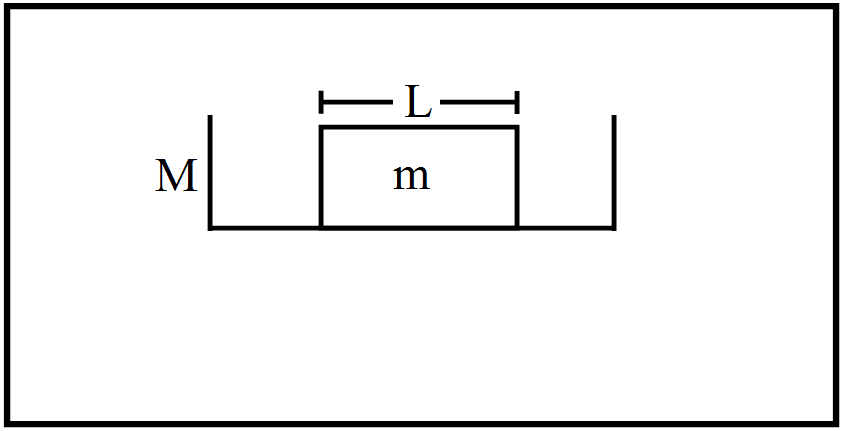
Consider a gravity-free hall in which a tray of mass M, carrying a cubical block of ice of mass m and edge L, is at rest in the middle. If the ice melts, by what distance does the centre of mass of "the tray plus the ice" system descend?

Metallic (nonferromagnetic) and nonmetallic particles in a solid waste may be separated as follows. The waste is allowed to slide down an incline over permanent magnets. The metallic particles slow down as compared to the norunetallic ones and hence are separated. Discuss the role of eddy currents in the process.
Define power of lens, obtain its equation and write its unit.