MCQ
Kirchhoff's first law is based on
  • A
    Conservation of momentum
  • B
    Conservation of mass
  • Conservation of charge
  • D
    Conservation of energy

Answer

Correct option: C.
Conservation of charge
C

Need a full question paper?

Generate a complete, print-ready paper with questions like this in minutes — across 16+ boards, with answer keys.

Start Generating Free

Similar questions

Predict the product $‘B’$ in the sequence of reaction

 $HC \equiv CH\mathop {\xrightarrow{{30\%\, {H_2}S{O_4}}}}\limits_{HgS{O_4}} A\xrightarrow{{NaOH}}B$
A body of $10\, kg$ is acted by a force of $129.4\, N$ if $g = 9.8\,m/{\sec ^2}$. The acceleration of the block is $10\,m/{s^2}$. What is the coefficient of kinetic friction
A particle is moving in a straight line with initial velocity and uniform acceleration $a$. If the sum of the distance travelled in $t^{\text {th }}$ and $( t +1)^{ th }$ seconds is $100 cm$, then its velocity after $t$ seconds, in $.........cm / s$, is
If $\mathrm{E}$ and $\mathrm{G}$ respectively denote energy and gravitational constant, then $\frac{\mathrm{E}}{\mathrm{G}}$ has the dimensions of :
An organ pipe open at one end is vibrating in first overtone and is in resonance with another pipe open at both ends and vibrating in third harmonic. The ratio of length of two pipes is
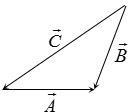
For the figure
Two identical capacitors are joined in parallel, charged to potential $V$, separated and then, connected in series, $i.e.$, the positive plate of one is connected to the negative plate of the other. Then
The phase difference between two $SHM\,\,$  ${y_1}\, = \,10\,\sin \,\left( {10\pi t\, + \,\frac{\pi }{3}} \right)$ and ${y_2}\, = \,12\,\sin \,\left( {8\pi t\, + \,\frac{\pi }{4}} \right)$  at $t = 0.5\,s$ it
A uniform wire of resistance $9$ $\Omega$ is cut into $3$ equal parts. They are connected in the form of equilateral triangle $ABC$. A cell of $e.m.f.$ $2\,V$ and negligible internal resistance is connected across $B$ and $C$. Potential difference across $AB$ is ............... $V$
The electric potential at a point $(x,\;y)$ in the $x - y$ plane is given by $V = - kxy$. The field intensity at a distance $r$ from the origin varies as