Question
Read the source given below and answer the following questions:
Swapna, a small farmer, grows groundnut on her three acres of land. She takes a loan from the moneylender to meet the expenses of cultivation, hoping that her harvest would help repay the loan. Midway through the season, the crop is hit by pests and the crop fails. Though Swapna sprays her crops with expensive pesticides, it makes little difference. She is unable to repay the moneylender, and the debt grows over the year into a large amount. Next year, Swapna takes a fresh loan for cultivation. It is a normal crop this year. But the earnings are not enough to cover the old loan. She is caught in debt. She has to sell a part of the land to pay off the debt.
Answer the following MCQs by choosing the most appropriate option
  1. The passage given above relates to which of the following options:
  1. Collateral Credit.
  2. Credit recovery is very painful.
  3. Failure of Crops.
  4. Credit is somewhere beneficial.
  1. According to the passage, Swapna faced which of the following options:
  1. The crop is hit by pests and the crop fails.
  2. She had to sell a part of the land to pay off the debt.
  3. Credit left her worse off.
  4. All of these.
  1. It refers to an agreement in which the lender supplies the borrower with money, goods or services in return for the promise of future payment:
  1. Terms and Credit.
  2. Credit.
  3. Depositor.
  4. Borrower.
  1. The above passage is an example of:
  1. Collateral.
  2. Debt Trap.
  3. Credit plays a vital and positive role.
  4. None of these.

Answer

(i)
(a)
Collateral Credit.
(ii)
(d)
All of these.
(iii)
(a)
Terms and Credit.
(iv)
(b)
Debt Trap.

Need a full question paper?

Generate a complete, print-ready paper with questions like this in minutes — across 16+ boards, with answer keys.

Start Generating Free

Similar questions

Maharashtra is a state located in western India, with a population of over 110 million people. The state is home to several large cities, including Mumbai, and has a significant agricultural sector. However, the state is facing a severe water crisis, with its water resources coming under increasing pressure due to climate change, industrialization, and urbanization. The main challenges faced by water resource management in Maharashtra are:
i.Overexploitation of groundwater: Maharashtra is one of the most groundwaterstressed states in India, with the demand for water exceeding the supply. Overexploitation of groundwater for agriculture and urban use has led to a declinein water levels, which has severe implications for the sustainability of water resources.
ii. Pollution of surface water: Industrialization and urbanization have led to the pollution of surface water bodies such as rivers and lakes. The pollution has led to water quality degradation, which poses risks to human health and the environment.
iii. Inefficient irrigation practices: The agricultural sector is the largest user of water in Maharashtra, accounting for around 80% of total water use. However, traditional irrigation practices such as flood irrigation are inefficient and lead to the wastage of water.

Q.1. Mention any two reasons for the water crisis faced by the state of Maharashtra.
Q.2. Despite being the second highest rainfall-receiving state of the country, Maharashtra still faces water crisis. Substantiate this statement in 40 words.
Q.3. Propose any one solution to mitigate the water crisis faced by Maharashtra state.
Read the case given below and answer the questions that follow:
Energy can be generated from fuel minerals like coal, petroleum, natural gas, uranium and from electricity. Energy resources can be classified as conventional and non-conventional sources. Conventional sources include: firewood, cattle dung cake, coal, petroleum, natural gas and electricity (both hydel and thermal). Non-conventional sources include solar, wind, tidal, geothermal, biogas and atomic energy. Firewood and cattle dung cake are most common in rural India. According to one estimate, more than 70 percent energy requirement in rural households is met by these two, continuation of these is increasingly becoming difficult due to decreasing forest area. Moreover, using dung cake too is being discouraged because it consumes most
valuable manure which could be used in agriculture.
Q.1. Which conventional energy source are mostly used in rural areas?
Q.2. It is becoming difficult to continue the use of firewood and cattle dung. What is the reason?
Q.3. What are conventional sources of energy? Give two examples.
Read the following text carefully and answer the questions that follow:
Many thought that given the disadvantages and rising resistance against the multipurpose projects, water harvesting system was a viable alternative, both socio- economically and environmentally. In ancient India, along with the sophisticated hydraulic structures, there existed an extraordinary tradition of water-harvesting system. People had in-depth knowledge of rainfall regimes and soil types and developed wide ranging techniques to harvest rainwater, groundwater, river water and flood water in keeping with the local ecological conditions and their water needs. In hill and mountainous regions, people built diversion channels like the 'guls' or 'kuls' of the Western Himalayas for agriculture. 'Rooftop rainwater harvesting' was commonly practised to store drinking water, particularly in Rajasthan. In the flood plains of Bengal, people developed inundation channels to irrigate their fields. In arid and semi-arid regions, agricultural fields were converted into rain fed storage structures that allowed the water to stand and moisten the soil like the 'khadins' in Jaisalmer and 'Johads' in other parts of Rajasthan.
i. What kind of agricultural structures were constructed for water harvesting in the hilly areas? (1)
ii. In different regions of India, name any two methods of rainwater harvesting with its purpose. (1)
iii. What types of water storage structures are found in arid and semi-arid regions? What is its purpose? (2)
Read the following text carefully and answer the questions that follow.

The Independence Day Pledge, 26 January, 1930

'We believe that it is the inalienable right of the Indian people, as of any other people, to have freedom and to enjoy the fruits of their toil and have the necessities of life, so that they may have full opportunities of growth. We believe also that if any government deprives a people of these rights and oppresses them, the people have a further right to alter it or to abolish it. The British Government in India has not only deprived the Indian people of their freedom but has based itself on the exploitation of the masses, and has ruined India economically, politically, culturally, and spiritually. We believe, therefore, that India must sever the British connection and attain Purna Swaraj or Complete Independence.
i. What was considered as an inalienable right? (1)
ii. Why did Indians ask for Purna Swaraj? (1)
iii. Examine the views of Indians towards the British Government in reference to this passage. (2)

Read the extract given below and answer the questions that follow:
CRUDE OIL RESERVES
Regions/ Countries
Reserves (2017) (Thousand Million Barrels)
Number of Years Reserves will last
Middle East
808
70
United States of America
50
10.5
World
1697
50.2
The table gives an estimate of reserves of crude oil (column1). More importantly, it also tells us for how many years the stock of crude oil will last if people continue to extract it at the present rate. The reserves would last only 50 years more. This is for the world as a whole. However, different countries face different situations. Countries like India depend on importing oil from abroad because they do not have enough stocks of their own. If prices of oil increase this becomes a burden for everyone. There are countries like the USA which have low reserves and hence want to secure oil through military or economic power. The question of sustainability of development raises many fundamentally new issues about the nature and process of development.
  1. The stock of Crude Oil for the world will last for how many more years?
  1. 70 years
  2. 60 years
  3. 40 years
  4. 50 years
  1. The reserve of Crude Oil available in the Middle is how many times more than the reserves in the USA?
  1. 15 times
  2. 16 times
  3. 14 times
  4. 17 times
  1. Which among the following is a Judicious use of Crude Oil Reserves.
  1. Importing from other countries for domestic use.
  2. Overuse of non renewable resources.
  3. Use of alternative sources of resources.
  4. None of these.
  1. How do powerful countries secure oil for their use?
  1. Through military or economic power.
  2. By buying from the Middle East at higher prices.
  3. By using alternative sources of energy.
  4. Putting a restriction on usage of Crude oil in their territories.
Read the extract given below and answer the questions that follow:
Suppose for the present that a particular country is quite developed. We would certainly like this level of development to go up further or at least be maintained for future generations. This is obviously desirable. However, since the second half of the twentieth century, a number of scientists have been warning that the present type, and levels, of development are not sustainable.
Groundwater is an example of renewable resources. These resources are replenished by nature as in the case of crops and plants. However, even these resources may be overused. For example, in the case of groundwater, if we use more than what is being replenished by rain then we would be overusing this resource.
Consequences of environmental degradation do not respect national or state boundaries; this issue is no longer region or nation specific. Our future is linked together. Sustainability of development is comparatively a new area of knowledge in which scientists, economists, philosophers and other social scientists are working together.
  1. Pick out the cause that enhances environmental degradation.
  1. Planting trees.
  2. Prevention of factory wastes getting mixed up with river water.
  3. Ban on using plastic bags.
  4. Allowing an increase in the level of exhaust fumes emited by cars, buses trucks etc.
  1. Which of the following statement defines sustainable development?
  1. Sustainable use of natural resources without considering the need of future generations.
  2. The present generation fulfills its needs while considering the needs of the future generations as well.
  3. It means the utilisation of natural resources by the past, present and the future generations.
  4. To meet the needs of the future generations even if the needs of the present generation is not met.
  1. What kind of development should be achieved by making a sincere attempt to preserve the environment and resources.
  1. Economic Development.
  2. Social Development.
  3. Sustainable Development.
  4. Political Development.
  1. The future generation may not have sufficient resources as compared to the present generation because:
  1. Resources are being used judiciously by the present generation, which will make them exhausted.
  2. Resources are being used optimally by the present generation which will make them exhausted.
  3. Resources are being overused by present generation, which will make them exhausted.
  4. Resources are not being used by the present generation, which will make them exhausted.
Read the source given below and answer the questions that follow:
During the 1830s, Giuseppe Mazzini had sought to put together a coherent programme for a unitary Italian Republic. He had also formed a secret society called Young Italy for the dissemination of his goals. The failure of revolutionary uprisings both in 1831 and 1848 meant that the mantle now fell on Sardinia-Piedmont under its ruler King Victor Emmanuel II to unify the Italian states through war. In the eyes of the ruling elites of this region, a unified Italy offered them the possibility of economic development and political dominance.
Answer the following MCQs by choosing the most appropriate options:
  1. What was the name of the secret society formed by Giuseppe Mazzini?
  1. Giuseppe Mazzini formed a secret society called Young Italy.
  2. Giuseppe Mazzini formed a secret society called Old Italy.
  3. Giuseppe Mazzini formed a secret society called Traditional Italy.
  4. Giuseppe Mazzini formed a secret society called Old France.
  1. When did Giuseppe Mazzini seek to put together a coherent programme for a unitary Italian Republic?
  1. During the 1860s, Giuseppe Mazzini had sought to put together a coherent programme for a unitary Italian Republic.
  2. During the 1730s, Giuseppe Mazzini had sought to put together a coherent programme for a unitary Italian Republic.
  3. During the 1930s, Giuseppe Mazzini had sought to put together a coherent programme for a unitary Italian Republic.
  4. During the 1830s, Giuseppe Mazzini had sought to put together a coherent programme for a unitary Italian Republic.
  1. Who was the ruler of Sardinia-Piedmont?
  1. King Victor David I was the ruler of Sardinia-Piedmont.
  2. King Victor Davis II was the ruler of Sardinia-Piedmont.
  3. King Victor Emmanuel II was the ruler of Sardinia-Piedmont.
  4. King Victor Emmanuel III was the ruler of Sardinia-Piedmont.
  1. What did a unified Italy offer the ruling elites of this region?
  1. A unified Italy offered them the possibility of underdevelopment and political dominance.
  2. A unified Italy offered them the possibility of economic development and political dominance.
  3. A unified Italy offered them the possibility of underdevelopment and political failure.
  4. A unified Italy offered them the possibility of social breakdown and political failure.
Read the text given below and answer the following questions.
Industrial locations are complex in nature. These are influenced by availability of raw material, labour, capital, power and market, etc. It is rarely possible to find all these factors available at one place. Consequently, manufacturing activity tends to locate at the most appropriate place where all the factors of industrial location are either available or can be arranged at lower cost. After an industrial activity starts, urbanisation follows. Sometimes, industries are located in or near the cities. Thus, industrialisation and urbanisation go hand in hand. Cities provide markets and also provide services such as banking, insurance, transport, consultants and financial advice, etc. to the industry. Many industries tend to come together to make use of the advantages offered by the urban centres known as agglomeration economies. Gradually, a large industrial agglomeration takes place. In the pre-Independence period, most manufacturing units were located in places from the point of view of overseas trade such as Mumbai, Kolkata, Chennai, etc. Consequently, there emerged certain pockets of industrially developed urban centres surrounded by a huge agricultural rural hinterland.
Answer the following MCQs by choosing the most appropriate option:
  1. What do you understand by agglomeration economies?
  1. Many industries tend to come together to make use of the advantages offered by the urban centres known as agglomeration economies.
  2. Making of a cooperatives.
  3. Small and cottage industries.
  4. Setting up of industries by an individual.
  1. Which facilities are provided by the cities?
  1. Banking.
  2. Insurance.
  3. Transport.
  4. All of these.
  1. Name the places where most of the manufacturing units were located from the point of view of overseas trade.
  1. Kanpur and Gorakhpur.
  2. Mumbai, Kolkata and Chennai.
  3. Trivandrum.
  4. Kochi.
  1. Which factors influence the setting up of industrial locations?
  1. Infrastructure.
  2. Technological Park.
  3. Shopping complexes and malls.
  4. Availability of raw material, labour, capital, power and market, etc.
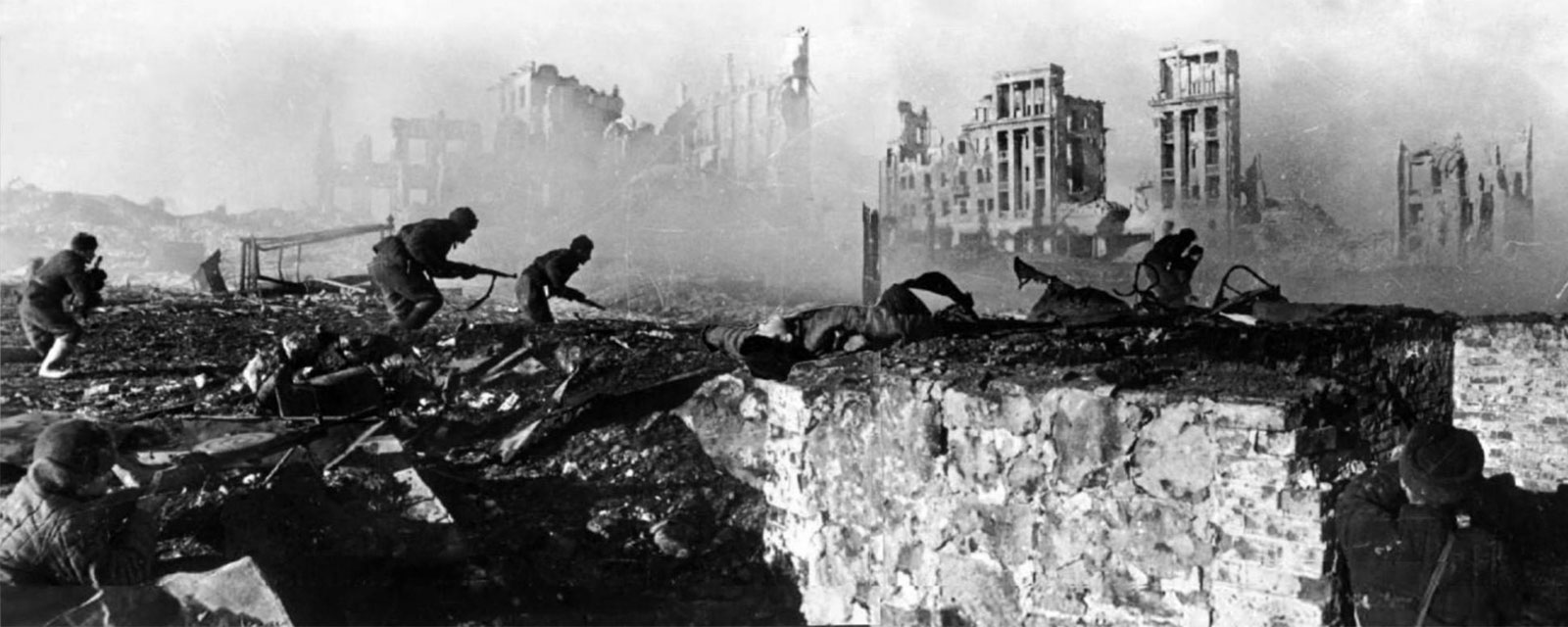
Observe the picture below and answer the questions that follow:
  1. Name the building in Soviet Russia which was devastated in the Second World War.
  2. When did this war break out? Between which two powers was this war fought?
The movement started with middle-class participation in the cities. Thousands of students left governmentcontrolled schools and colleges, headmasters and teachers resigned, and lawyers gave up their legal practices. The council elections were boycotted in most provinces except Madras, where the Justice Party, the party of the non-Brahmans, felt that entering the council was one way of gaining some power - something that usually only Brahmans had access to. The effects of non-cooperation on the economic front were more dramatic. Foreign goods were boycotted, liquor shops picketed, and foreign cloth burnt in huge bonfires. The import of foreign cloth halved between 1921 and 1922, its value dropping from ₹ 102 crore to ₹ 57 crore. In many places, merchants and traders refused to trade in foreign goods or finance foreign trade. As the boycott movement spread, and people began discarding imported clothes and wearing only Indian ones, the production of Indian textile mills and handlooms went up.
i. Explain the meaning of picketing liquor shops.
ii. When did the Non-Cooperation-Khilafat Movement begin?
iii. Why did the movement in the cities gradually slow down?