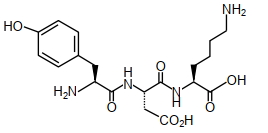
The first harmone chemically synthesised in the laboratory is
Easy


Download our appand get started for free
Experience the future of education. Simply download our apps or reach out to us for more information. Let's shape the future of learning together!No signup needed.*
Similar Questions
- 1Number of compounds from the following which will not produce orange red precipitate with Benedict solution is $..............$. Glucose, maltose, sucrose, ribose,$2-$deoxyribose, amylose, lactose.View Solution
- 2Which of the following statement($s$) is(are) true ?View Solution
$(1)$ Oxidation of glucose with bromine water gives glutamic acid
$(2)$ The two six-membered cyclic hemiacetal forms of $D-(+)$-glucose ard called anomers
$(3)$ Hydrolysis of sucrose gives dextrorotatory glucose and laevorotatory fructose
$(4)$ Monosaccharides cannot be hydrolysed to give polyhydroxy aldehydes and ketones
- 3View SolutionAn example of a disaccharide made up of two units of the same monosaccharides is
- 4The $pK_a$ values for the three ionizable groups $X , Y$ and $Z$ of glutamic acid are $4.3, 9.7$ and $2.2$ respectivelyView Solution
$\begin{matrix}
\underset{X}{\mathop{H}}{{O}_{2}}C-C{{H}_{2}}-CH-C{{O}_{2}}\underset{Z}{\mathop{H}}\, \\
\,\,\,\,\,\,\,\,\,\,\,| \\
\,\,\,\,\,\,\,\,\,\,\,\,\,+N{{H}_{3}} \\
\end{matrix}$The isoelectric point for the amino acid is
- 5Choose the peptide that matches the abbreviation $Phe-Val-Ala.$View Solution
- 6View SolutionOn complete hydrolysis of starch, we finally get
- 7View SolutionBlood calcium level can be increased by the administration of
- 8View SolutionA nanopeptide contains …….. peptide linkages
- 9View SolutionEnzymes belong to which class of compounds
- 10The structure of a peptide is given belowView Solution
If the absolute values of the net charge of the peptide at $pH =2, pH =6$, and $pH =11$ are $\left| z _1\right|,\left| z _2\right|$ and $\left|z_3\right|$, respectively, then what is $\left|z_1\right|+\left|z_2\right|+\left|z_3\right|$ ?