Question
What are the methods of preparing trial balance?

Answer

A trial balance can be prepared in the following three ways:
  • Totals Method: In this method, the total of the debit and the credit side of the ledger is determined and presented separately in the trial balance. The total of both the sides should match as the accounts are based on double entry system.
  • Balances Method: In this method, the balances of all ledger accounts are presented in their respective debit and credit columns of the trial balance. The total of both the sides should match as the accounts are based on double entry system and this method of preparing a trial balance is widely used because it helps in the preparation of financial statements.
  • Totals-cum-balances Method: This method is a blend of the totals and balances method. This method has four columns. The first two columns are to write the totals of the debits and credits of the various accounts and the other two columns are to write the debit or the credit balances of these accounts. This method is time consuming, and hence are not used widely.

Need a full question paper?

Generate a complete, print-ready paper with questions like this in minutes — across 16+ boards, with answer keys.

Start Generating Free

Similar questions

Enter the following transactions in the Journal of Ganesh Bros.:
2017
 
March 3
Sold goods to Dev
1,00,000
March 5
Received from Dev in full settlement of his account
98,000
March 6
Sold goods to Manmohan
80,000
March 8
Manmohan returned goods
1,000
March 15
Received from Manmohan in full settlement of his account
78,200
March 16 Received cash from Ram and 19,500
Discount allowed 500
March 20 Paid cash to Pawan and 4,700
Discount received from him 300
March 25
Sold goods to Varun of the list price of 25,000 at 20% trade discount
 
On 1st April, 2015, a Company bought Plant and Machinery costing ₹ 68,000. It is estimated that its working life is 10 years, at the end of which it will fetch ₹ 8,000. Additions are made on 1st April, 2016 to the value of ₹ 40,000 (Residual value ₹ 4,000). More additions are made on Oct. 1, 2017 to the value of ₹ 9,800 (Break up value ₹ 800). The working life of both the additional Plant and machinery is 20 years.
Show the Plant and Machinery account for the first four years, if depreciation is written off according to Straight Line Method. The accounts are closed on 31st March every year.
Prepare an Accounting Equation on the basis of the following transaction:
  1. Started business with cash ₹ 70,000.
  2. Credit purchase of goods ₹ 18,000.
  3. Payment made to creditors in full settlement ₹ 17,500.
  4. Purchase of machinery for cash ₹ 20,000.
  5. Depreciation on machinery ₹ 2,000.
State any six users of accounting information Why do they need accounting information?
Enter the following transactions in a petty cash book in analytical form. The book is kept on imprest system, amount of imprest being ₹ 5,000.
2016  
April 3 Petty Cash in hand ₹ 420. Received cash to make-up the imprest
Bought stamps for ₹ 300
April 5 Paid for office cleaning ₹ 200 and repairs to furniture ₹ 250
April 7 Paid bus fare ₹ 440, railway fare ₹ 330, wages ₹ 200
April 8 Paid for charity ₹ 350
April 9 Bought shorthand note book for office ₹ 250, Carriage on parcels ₹ 280
April 10 Bought envelopes ₹ 450, served refreshment to customers ₹ 150
April 12 Paid for conveyance ₹ 300. Wages ₹ 200. Stapler pins ₹ 280
April 15 Gave tips to office peon ₹ 250
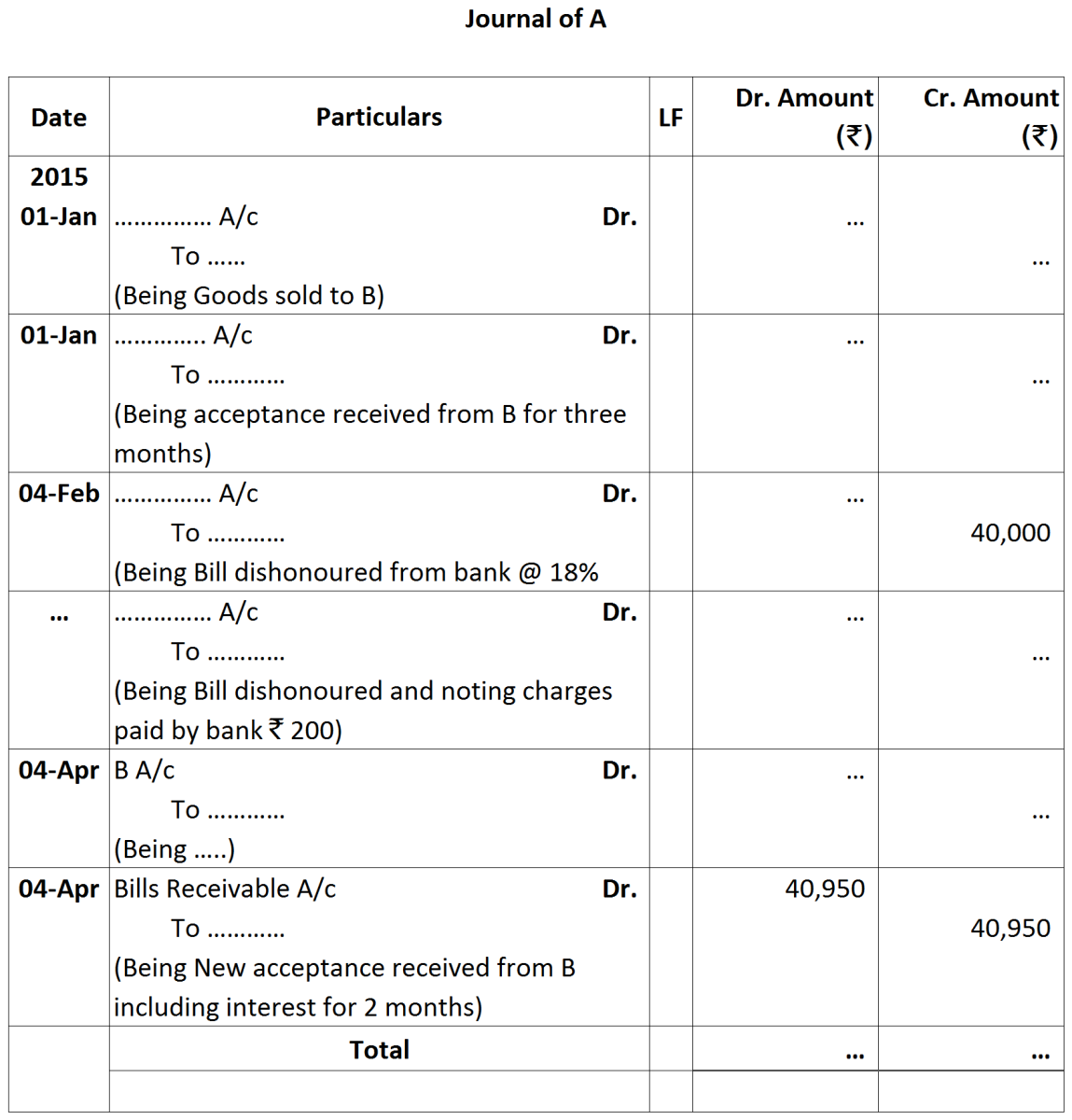
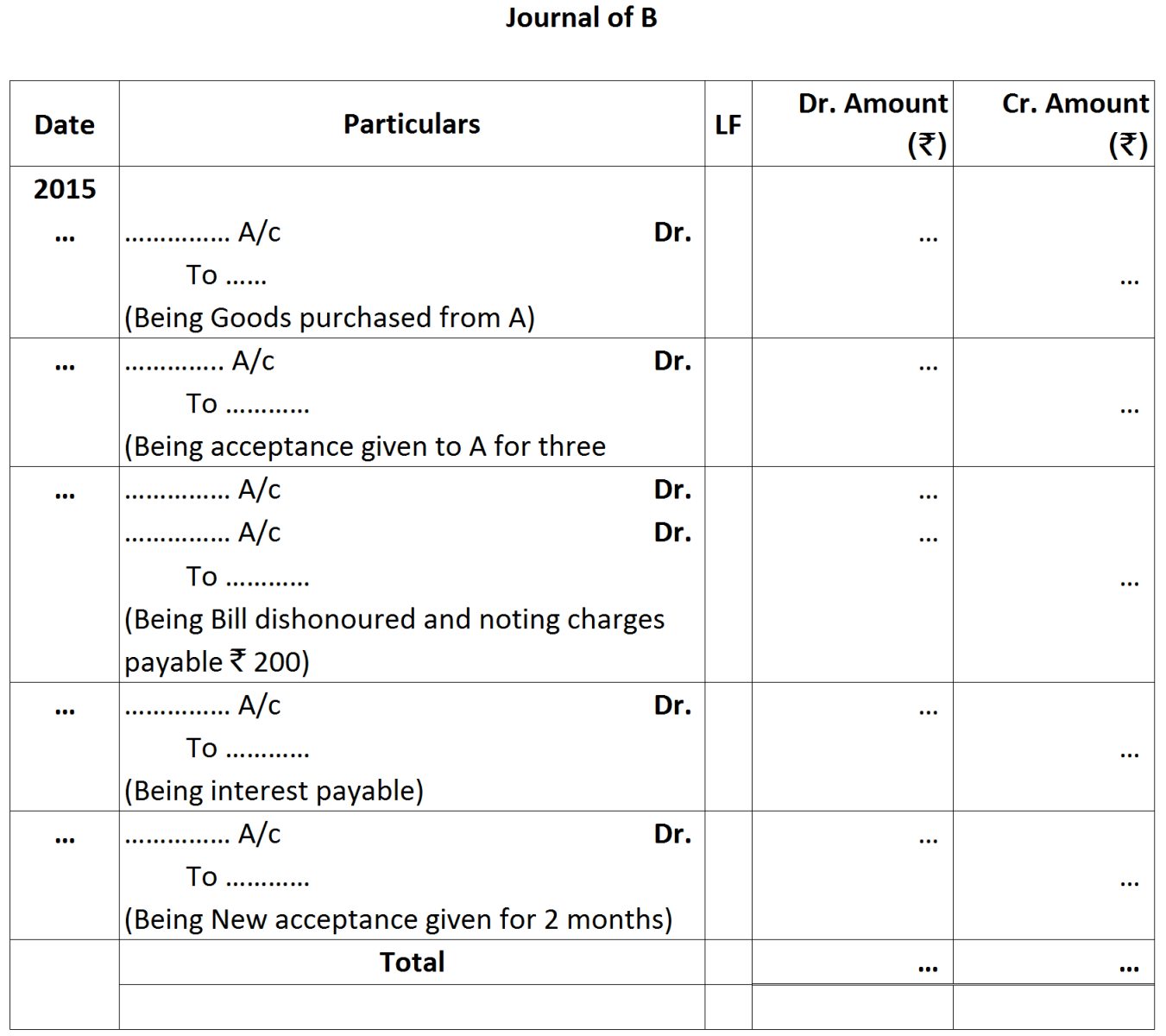
Fill in the missing values on the basis of narration:
A Trial Balance showed excess credit of ₹ 2,728, which were placed in a suspense account. Later on the following errors were located. Pass rectifying entries and prepare Suspense A/c.
  1. ₹ 825, the total of purchase return book has been posted to the debit of sales return account.
  2. Goods purchased from Suresh ₹ 1,800 recorded in Sales Book as ₹ 180.
  3. An item of ₹ 328 written off as a bad debt from Ajay Sharma has not been debited to Bad Debts Account.
  4. Goods purchased from X ₹ 3,500 and from Y ₹ 4,000, but were recorded in the purchase book as X ₹ 4,000 and Y ₹ 3,500.
  5. Goods returned to Ramesh for ₹ 2,600 was correctly recorded in the return outward book but was wrongly posted to his account as ₹ 260.
  6. A sum of ₹ 2,210 stolen by an ex-employee stand debited to Suspense A/c.
  7. A sum of ₹ 500 written off as depreciation on Machinery, were not posted to Machinery account.
Enter the following transactions in subsidiary books, post them into Ledger and prepare a Trial Balance:
The following balances existed in Sunil Bros. books on April 1, 2017:
Assets: Cash in hand ₹ 27,500; Bank Balance ₹ 40,000; Debtors: Ashok ₹ 18,000, Bahadur ₹ 25,000, Charu ₹ 30,000; Stock ₹ 1,60,000 and Furniture ₹ 40,000.
Liabilities: Creditors: Dinesh ₹ 20,000 and Ekta ₹ 15,000.
2017
 
April 1
Cash Sales ₹ 18,000
April 2 Deposited into Bank ₹ 20,000
April 3
Purchased from Dinesh:
300 metres Cotton @ ₹ 60 per metre
200 metres Silk @ ₹ 100 per metre
April 5 Cheque issued to Dinesh for ₹ 25,000
April 6 Accepted a bill at one month for ₹ 15,000 drawn by Dinesh
April 8 Sold to Ashok:
400 metres Cotton @ ₹ 80 per metre
250 metres Silk @ ₹ 140 per metre
April 10 Returned by Ashok 50 metres Silk
April 12 Received Cash ₹ 8,000 and a Cheque for ₹ 40,000 from Ashok. Cheque was immediately sent to Bank.
April 13 Received a B/R from Bahadur for ₹ 20,000 at one month
April 15 Accepted a bill at two months drawn by Ekta for the amount due to her.
April 16 Purchased a Computer for office use from Shiva Ltd. for ₹ 45,000 on Credit.
April 18 Cash purchases ₹ 10,000
April 19 Received full payment from Charu by cheque, sent it to Bank. Discount allowed 2%
April 20 Issued a cheque to Dinesh in full payment of his account after deducting 1% discount
April 22 Settled the account of Shiva Ltd. by a cheque
April 24 Proprietor took away goods worth ₹ 5,000 and Cash ₹ 6,000
April 25 Purchased from Ganesh 200 metres Cotton @ ₹ 70 per metre subject to trade discount of 5%
April 27 Paid Rent ₹ 3,000 and Salaries ₹ 8,000
April 30 Interest allowed by bank ₹ 600
Develop an Accounting Equation from the following transactions:
S.no  
(i) Mohan commenced business with cash 50,000
(ii) Purchased goods for cash 30,000
(iii) Purchased goods on credit 20,000
(iv) Sold goods (costing ₹ 10,000) for 12,000
(v) Bought furniture on credit 2,000
(vi) Paid cash to a creditor 15,000
(vii) Salary paid 1,000
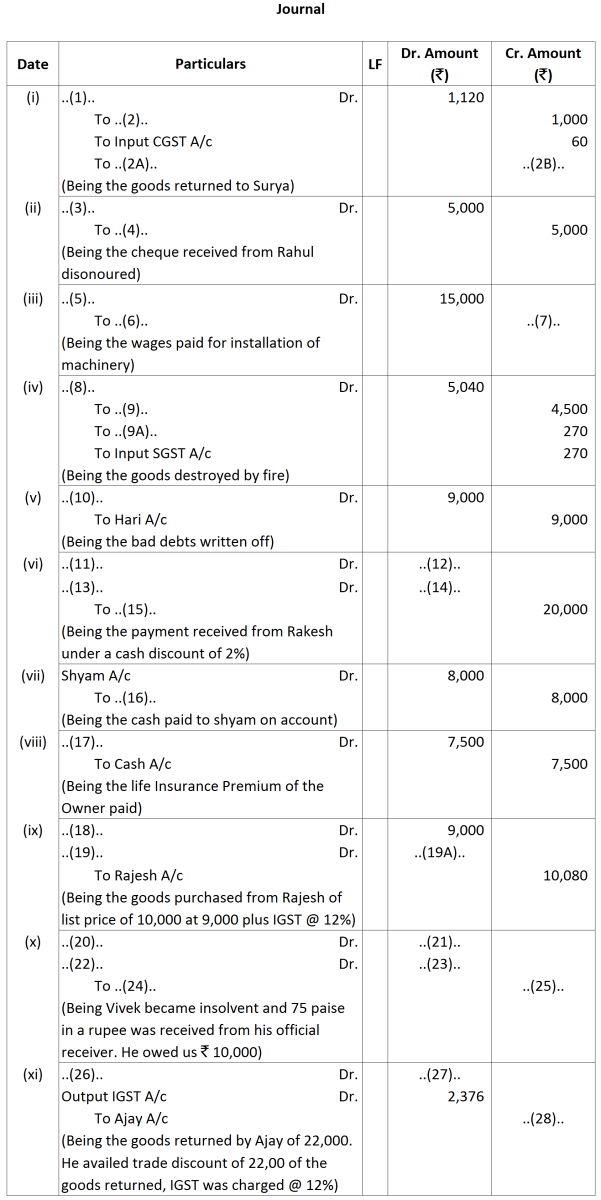
Fill up the missing information in the following journal entries: