Question
Need a full question paper?
Generate a complete, print-ready paper with questions like this in minutes — across 16+ boards, with answer keys.
Explore more
Similar questions
→→→→→→→→→→
A1. Simple Factual Activity:
Complete the following sentences with the information given in the passage:
(1) The man with crooked leg was _______________.
(2) Someone said that the Seth had hanged himself _______________.
Old Ganpat the beggar, had a crooked leg. He had been squatting on the pavement for years, calling for alms. In the evening someone would come with a barrow and take him away. He had never been known to walk. But now, on learning that the bank was about to collapse, Ganpat astonished everyone, leaping to his feet and actually running at top speed in the direction of the bank. It soon became known that he had a thousand rupees in savings!
Men stood in groups at street corners discussing the situation. Pipalnagar seldom had a crisis, seldom or never had floods, earthquakes or drought; and the imminent crash of the Pipalnagar Bank set everyone talking and speculating and rushing about in a frenzy. Some boasted of their farsightedness, congratulating themselves on having already taken out their money, or on never having put any in; others speculated on the reasons for the crash, putting it all down to excesses indulged in by Seth Govind Ram. The Seth had fled the State, said one. He had fled the country, said another. He was hiding in Pipalnagar, said a third. He had hanged himself from the tamarind tree, said a fourth, and had been found that morning by the sweeper-boy.
By noon the small bank had gone through all; its ready cash, and the harassed manager was in a dilemma. Emergency funds could only be obtained from another bank some thirty miles distant, and he wasn’t sure he could persuade the crowd to wait
until then. And there was no way of contacting Seth Govind Ram on his houseboat in Kashmir.
A2. Complex Factual Activity:
Complete the following sentences that tell you about Ganpat, the beggar:
(1) Ganpat was an old beggar who had a _______________.
(2) He had been _______________ for years.
A3. Activities based on Vocabulary:
Find the describing words for the following from the passage:
(1) fund (2) leg (3) manager (4) speed
A4. Activities based on Contextual Grammar:
(1) I must know the reason. You are late.
(Join the sentence with the word 'why'.)
(2) He was hiding in Pipalnagar.
(Rewrite the sentence using Simple Present Tense.)
A5. Personal Response:
(1) Have you ever heard a rumour that harmed people? Elaborate it.
Complete the following sentences with the information given in the passage:
(1) The man with crooked leg was _______________.
(2) Someone said that the Seth had hanged himself _______________.
Old Ganpat the beggar, had a crooked leg. He had been squatting on the pavement for years, calling for alms. In the evening someone would come with a barrow and take him away. He had never been known to walk. But now, on learning that the bank was about to collapse, Ganpat astonished everyone, leaping to his feet and actually running at top speed in the direction of the bank. It soon became known that he had a thousand rupees in savings!
Men stood in groups at street corners discussing the situation. Pipalnagar seldom had a crisis, seldom or never had floods, earthquakes or drought; and the imminent crash of the Pipalnagar Bank set everyone talking and speculating and rushing about in a frenzy. Some boasted of their farsightedness, congratulating themselves on having already taken out their money, or on never having put any in; others speculated on the reasons for the crash, putting it all down to excesses indulged in by Seth Govind Ram. The Seth had fled the State, said one. He had fled the country, said another. He was hiding in Pipalnagar, said a third. He had hanged himself from the tamarind tree, said a fourth, and had been found that morning by the sweeper-boy.
By noon the small bank had gone through all; its ready cash, and the harassed manager was in a dilemma. Emergency funds could only be obtained from another bank some thirty miles distant, and he wasn’t sure he could persuade the crowd to wait
until then. And there was no way of contacting Seth Govind Ram on his houseboat in Kashmir.
A2. Complex Factual Activity:
Complete the following sentences that tell you about Ganpat, the beggar:
(1) Ganpat was an old beggar who had a _______________.
(2) He had been _______________ for years.
A3. Activities based on Vocabulary:
Find the describing words for the following from the passage:
(1) fund (2) leg (3) manager (4) speed
A4. Activities based on Contextual Grammar:
(1) I must know the reason. You are late.
(Join the sentence with the word 'why'.)
(2) He was hiding in Pipalnagar.
(Rewrite the sentence using Simple Present Tense.)
A5. Personal Response:
(1) Have you ever heard a rumour that harmed people? Elaborate it.
A1. Simple Factual Activities:
State whether the following statements are Right or Wrong. Correct the wrong ones:
(i) The beggar and the young girl were playing on the road because there was a lot of traffic.
(ii) The scene of the beggar and the girl made Meena peep into her own life.
(iii) The beggar became Meena's role model.
(iv) It took Meena almost two years to put the change into effect.
‘Yes, a beggar,’ she repeated, as if to reassure me. ‘He was old and used to stay in front of my house with his five-year old granddaughter. As you know, I was a chronic pessimist. I used to give my leftovers to this beggar every day. I never spoke to him. Nor did he speak to me. One monsoon day, I looked out of my bedroom window and started cursing the rain. I don’t know why I did that because I wasn’t even getting wet. That day I couldn’t give the beggar and his granddaughter their daily quota of leftovers. They went hungry, I am sure.
‘However, what I saw from my window surprised me. The beggar and the young girl were playing on the road because there was no traffic. They were laughing, clapping and screaming joyously, as if they were in paradise. Hunger and rain did not matter.They were totally drenched and totally happy. I envied their zest for life.
‘That scene forced me to look at my own life. I realized I had so many comforts, none of which they had. But they had the most important of all assets, one which I lacked. They knew how to be happy with life as it was. I felt ashamed of myself. I even started to make a list of what I had and what I did not have. I found I had more to be grateful for than most people could imagine. That day, I decided to change my attitude towards life, using the beggar as my role model.’
After a long pause, I asked Meena how long it had taken her to change.
‘Once this realization dawned’, she said, ‘it took me almost two years to put the change into effect. Now nothing matters. I am always happy. I find happiness in every small thing, in every situation and in every person.’
‘Did you give any gurudakshina to your guru ?’ I asked.
‘No. Unfortunately, by the time I understood things, he was dead. But I sponsored his granddaughter to a boarding school as a mark of respect to him.’
A2. Complex Factual Activities:
(1) Meena sponsored the granddaughter of the beggar because _______________.
(a) she was alone in her life after his death.
(b) it was a token of respect to the beggar.
(c) she was rich and so she wanted to help.
(2) _______________ was the most important of all assets, that the beggar and his granddaughter had but the writer was lacking.
(a) Attitude towards life
(b) So many comforts
(c) Hunger.
A3. Activities based on Vocabulary:
Match the synonyms:
State whether the following statements are Right or Wrong. Correct the wrong ones:
(i) The beggar and the young girl were playing on the road because there was a lot of traffic.
(ii) The scene of the beggar and the girl made Meena peep into her own life.
(iii) The beggar became Meena's role model.
(iv) It took Meena almost two years to put the change into effect.
‘Yes, a beggar,’ she repeated, as if to reassure me. ‘He was old and used to stay in front of my house with his five-year old granddaughter. As you know, I was a chronic pessimist. I used to give my leftovers to this beggar every day. I never spoke to him. Nor did he speak to me. One monsoon day, I looked out of my bedroom window and started cursing the rain. I don’t know why I did that because I wasn’t even getting wet. That day I couldn’t give the beggar and his granddaughter their daily quota of leftovers. They went hungry, I am sure.
‘However, what I saw from my window surprised me. The beggar and the young girl were playing on the road because there was no traffic. They were laughing, clapping and screaming joyously, as if they were in paradise. Hunger and rain did not matter.They were totally drenched and totally happy. I envied their zest for life.
‘That scene forced me to look at my own life. I realized I had so many comforts, none of which they had. But they had the most important of all assets, one which I lacked. They knew how to be happy with life as it was. I felt ashamed of myself. I even started to make a list of what I had and what I did not have. I found I had more to be grateful for than most people could imagine. That day, I decided to change my attitude towards life, using the beggar as my role model.’
After a long pause, I asked Meena how long it had taken her to change.
‘Once this realization dawned’, she said, ‘it took me almost two years to put the change into effect. Now nothing matters. I am always happy. I find happiness in every small thing, in every situation and in every person.’
‘Did you give any gurudakshina to your guru ?’ I asked.
‘No. Unfortunately, by the time I understood things, he was dead. But I sponsored his granddaughter to a boarding school as a mark of respect to him.’
A2. Complex Factual Activities:
(1) Meena sponsored the granddaughter of the beggar because _______________.
(a) she was alone in her life after his death.
(b) it was a token of respect to the beggar.
(c) she was rich and so she wanted to help.
(2) _______________ was the most important of all assets, that the beggar and his granddaughter had but the writer was lacking.
(a) Attitude towards life
(b) So many comforts
(c) Hunger.
A3. Activities based on Vocabulary:
Match the synonyms:
| Column 'A' | Column 'B' |
| (1) paradise | (a) enthusiasm |
| (2) zest | (b) valuable thing |
| (3) asset | (c) wet |
| (4) drenched | (d) heaven |
A4. Activities based on Contextual Grammar:
(1) Do as directed:
He used to stay in front of my house.
(Rewrite the sentence by using 'would'.)
(2) Change the voice:
That scene forced me to look at my own life.
(Begin the sentence with "I .....)
A5. Personal Response:
(1) According to you, how can we help beggars?
A1. Simple Factual Activity:
Complete the following sentences using information in the passage:
(1) The young seagull commended _______________.
(2) He completely forgot that _______________.
Then he completely forgot that he had not always been able to fly, and commended himself to dive and soar and curve, shrieking shrilly.
He was near the sea now, flying straight over it, facing straight out over the ocean. He saw a vast green sea beneath him, with little ridges moving over it and he turned his beak sideways and cawed amusedly.
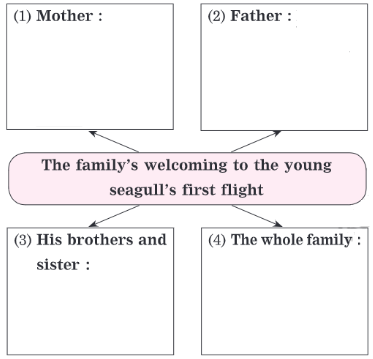
His parents and his brothers and sister had landed on this green flooring ahead of him. They were beckoning to him, calling shrilly. He dropped his legs to stand on the green sea. His legs sank into it. He screamed with fright and attempted to rise again flapping his wings. But he was tired and weak with hunger and he could not rise, exhausted by the strange exercise. His feet sank into the green sea, and then his belly touched it and he sank no farther. He was floating on it, and around him his family was screaming, praising him and their beaks were offering him scraps of dog-fish. He had made his first flight.
A2. Complex Factual Activity:
Complete the web :
A3. Activities based on Vocabulary:
(commended, attempted, exhausted, soared)
(1) The rocket _______________ up into space.
(2) Our achievements in Science Exhibition was highly _______________ by our Principal.
(3) He was totally _______________ after the day's tedious work.
(4) The thief _______________ to give the slip, but was caught by the police.
A4. Activities based on Contextual Grammar:
Do as directed:
(1) He was near the sea now. (Frame a Wh-question to get the underlined as an answer.)
(2) He could not rise. (Add a question tag.)
A5. Personal Response:
(1) How does your family help you to achieve your goal?
Complete the following sentences using information in the passage:
(1) The young seagull commended _______________.
(2) He completely forgot that _______________.
Then he completely forgot that he had not always been able to fly, and commended himself to dive and soar and curve, shrieking shrilly.
He was near the sea now, flying straight over it, facing straight out over the ocean. He saw a vast green sea beneath him, with little ridges moving over it and he turned his beak sideways and cawed amusedly.
His parents and his brothers and sister had landed on this green flooring ahead of him. They were beckoning to him, calling shrilly. He dropped his legs to stand on the green sea. His legs sank into it. He screamed with fright and attempted to rise again flapping his wings. But he was tired and weak with hunger and he could not rise, exhausted by the strange exercise. His feet sank into the green sea, and then his belly touched it and he sank no farther. He was floating on it, and around him his family was screaming, praising him and their beaks were offering him scraps of dog-fish. He had made his first flight.
A2. Complex Factual Activity:
Complete the web :
A3. Activities based on Vocabulary:
(commended, attempted, exhausted, soared)
(1) The rocket _______________ up into space.
(2) Our achievements in Science Exhibition was highly _______________ by our Principal.
(3) He was totally _______________ after the day's tedious work.
(4) The thief _______________ to give the slip, but was caught by the police.
A4. Activities based on Contextual Grammar:
Do as directed:
(1) He was near the sea now. (Frame a Wh-question to get the underlined as an answer.)
(2) He could not rise. (Add a question tag.)
A5. Personal Response:
(1) How does your family help you to achieve your goal?
A1. Simple Factual Activity:
State whether the following statements are True or False:
(1) R. K. Narayan's 'Swami and Friends' is a good read for the kids and teens alike.
(2) Mischievous kids are not as sensitive as other people.
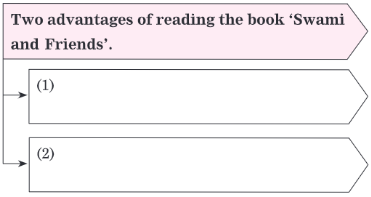
Significance of the book...
‘Swami and Friends’ by R. K. Narayan is not merely an interesting read that could be enjoyed from top to bottom, but the work attributes a lot of literary values even if it is a teen book ‘Swami and Friends’ is a good read for the kids and teens alike. Also the book is widely used in the Asian continent as a study text for the students who study literature as a subject at schools. This does not mean that the book is filled with heavy grammar and technical jargon. Actually the truth is in contrary to this.
Swami and Friends is written in such simple English it is hard to imagine that it is a work of such a literary genius like R. K. Narayan. The English used in the book is both plain and simple, without any troubling words for the kids. Also the use of simple and short sentences adds to the simplicity of the book.
It is mentioned in the description that the book is about a mischievous ten year old Indian boy, and some parents may be concerned about the influence this will have on their already mischievous children. But the book is as such, that it encompasses the
mischief of the kids in a view of the kid which is harmless and pure in his perspective. Also amidst all the mischief and naughtiness, we actually find that Swami is a loving and a tender kid who's actually very sensitive. It is also a known fact that mischievous
kids are the most sensitive and loving people of all. And R. K. Narayan does a great job conveying that to all of us.
A2. Complex Factual Activity:
Complete the following web:
A3. Activities based on Vocabulary:
Find the following from the passage:
(i) Noun forms of : conclude, rule
(ii) Verb forms of : improvement, inclusion
A4. Activities based on Contextual Grammar:
Do as directed:
(1) The author is one of the greatest authors of all the time.
(Change the sentence into positive degree.)
(2) R. K. Narayan is responsible for many of the outstanding literary works.
(Frame a Wh-question to get the underlined as answer.)
A5. Personal Response:
(1) What difference do you find between the children of Swami's days and today's children?
State whether the following statements are True or False:
(1) R. K. Narayan's 'Swami and Friends' is a good read for the kids and teens alike.
(2) Mischievous kids are not as sensitive as other people.
Significance of the book...
‘Swami and Friends’ by R. K. Narayan is not merely an interesting read that could be enjoyed from top to bottom, but the work attributes a lot of literary values even if it is a teen book ‘Swami and Friends’ is a good read for the kids and teens alike. Also the book is widely used in the Asian continent as a study text for the students who study literature as a subject at schools. This does not mean that the book is filled with heavy grammar and technical jargon. Actually the truth is in contrary to this.
Swami and Friends is written in such simple English it is hard to imagine that it is a work of such a literary genius like R. K. Narayan. The English used in the book is both plain and simple, without any troubling words for the kids. Also the use of simple and short sentences adds to the simplicity of the book.
It is mentioned in the description that the book is about a mischievous ten year old Indian boy, and some parents may be concerned about the influence this will have on their already mischievous children. But the book is as such, that it encompasses the
mischief of the kids in a view of the kid which is harmless and pure in his perspective. Also amidst all the mischief and naughtiness, we actually find that Swami is a loving and a tender kid who's actually very sensitive. It is also a known fact that mischievous
kids are the most sensitive and loving people of all. And R. K. Narayan does a great job conveying that to all of us.
A2. Complex Factual Activity:
Complete the following web:
A3. Activities based on Vocabulary:
Find the following from the passage:
(i) Noun forms of : conclude, rule
(ii) Verb forms of : improvement, inclusion
A4. Activities based on Contextual Grammar:
Do as directed:
(1) The author is one of the greatest authors of all the time.
(Change the sentence into positive degree.)
(2) R. K. Narayan is responsible for many of the outstanding literary works.
(Frame a Wh-question to get the underlined as answer.)
A5. Personal Response:
(1) What difference do you find between the children of Swami's days and today's children?

A1. Simple Factual Activities:
State whether the following statements are True or False:
(1) Bishamber was a young bridegroom.
(2) Ramlal had never dreamt that his fourth daughter Bholi would have such a grand wedding.
(3) When Bholi was brought near the sacred fire she was in a red silken bridal dress.
(4) Bholi felt herself lucky to get a well-to-do bridegroom like Bishamber.
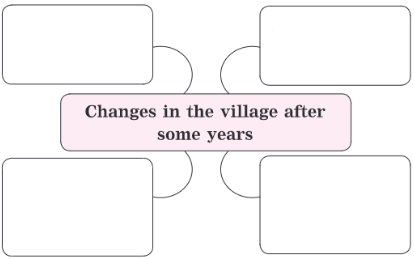
Thus the years passed.
The village became a small town. The little primary school became high school. There were now a cinema under a tin shed and a cotton ginning mill. The mail train began to stop at their railway station.
One night, after dinner, Ramlal said to his wife, “Then, shall I accept Bishamber’s proposal?”
“Yes, certainly” his wife said. “Bholi will be lucky to get such a well to do bridegroom. A big shop, a house of his own and I hear several thousands in the bank. Moreover, he is not asking for any dowry”.
“That’s right, but he is not so young, you know -almost the same age as I am- and he also limps. Moreover, the children from his first wife are quite grown up”.
“So what does it matter ?” his wife replied. “Forty five or fifty-it is no great age for a man. We are lucky that he is from another village and does not know about her pockmarks and her lack of sense. If we don’t accept this proposal, she may remain
unmarried all her life.”
“Yes, but I wonder what Bholi will say”.
“What will that witless one say ? She is like a dumb cow.”
“May be you are right”, muttered Ramlal. In the other corner of the courtyard, Bholi lay awake on her cot, and listened to her parents’ whispered conversation.
Bishamber Nath was a well - to - do grocer. He came with a big party of friends and relations with him for the wedding. A brass band playing a popular tune from an Indian film headed the procession, with the bridegroom riding a decorated horse. Ramlal was
overjoyed to see such pomp and splendour. He had never dreamt that his fourth daughter would have such a grand wedding. Bholi’s elder sisters who had come for the occasion were envious of her luck.
When the auspicious moment came the priest said, “Bring the bride”. Bholi, clad in a red silken bridal dress, was led to bride’s place near the sacred fire.
“Garland the bride,” one of his friends prompted Bishamber Nath.
A2. Complex Factual Activities:
Complete the following web :
A3. Activities based on Vocabulary:
Complete the following sentences using the words given in the brackets:
(envious, procession, overjoyed)
(1) Most of the youngsters like to dance in marriage _______________.
(2) He was _______________ to see his friend after a long time.
A4. Activities based on Contextual Grammar:
Change the following sentences in indirect speech:
(1) "What will that witless one say? She is like a dumb cow". "May be you are right," muttered Ramlal.
(2) "Yes, certainly," his wife said, "Bholi will be lucky to get such a well-to-do bridegroom."
A5. Personal Response:
(1) What is your opinion about Bholi's bridegroom? Should she get married to him?
State whether the following statements are True or False:
(1) Bishamber was a young bridegroom.
(2) Ramlal had never dreamt that his fourth daughter Bholi would have such a grand wedding.
(3) When Bholi was brought near the sacred fire she was in a red silken bridal dress.
(4) Bholi felt herself lucky to get a well-to-do bridegroom like Bishamber.
Thus the years passed.
The village became a small town. The little primary school became high school. There were now a cinema under a tin shed and a cotton ginning mill. The mail train began to stop at their railway station.
One night, after dinner, Ramlal said to his wife, “Then, shall I accept Bishamber’s proposal?”
“Yes, certainly” his wife said. “Bholi will be lucky to get such a well to do bridegroom. A big shop, a house of his own and I hear several thousands in the bank. Moreover, he is not asking for any dowry”.
“That’s right, but he is not so young, you know -almost the same age as I am- and he also limps. Moreover, the children from his first wife are quite grown up”.
“So what does it matter ?” his wife replied. “Forty five or fifty-it is no great age for a man. We are lucky that he is from another village and does not know about her pockmarks and her lack of sense. If we don’t accept this proposal, she may remain
unmarried all her life.”
“Yes, but I wonder what Bholi will say”.
“What will that witless one say ? She is like a dumb cow.”
“May be you are right”, muttered Ramlal. In the other corner of the courtyard, Bholi lay awake on her cot, and listened to her parents’ whispered conversation.
Bishamber Nath was a well - to - do grocer. He came with a big party of friends and relations with him for the wedding. A brass band playing a popular tune from an Indian film headed the procession, with the bridegroom riding a decorated horse. Ramlal was
overjoyed to see such pomp and splendour. He had never dreamt that his fourth daughter would have such a grand wedding. Bholi’s elder sisters who had come for the occasion were envious of her luck.
When the auspicious moment came the priest said, “Bring the bride”. Bholi, clad in a red silken bridal dress, was led to bride’s place near the sacred fire.
“Garland the bride,” one of his friends prompted Bishamber Nath.
A2. Complex Factual Activities:
Complete the following web :
A3. Activities based on Vocabulary:
Complete the following sentences using the words given in the brackets:
(envious, procession, overjoyed)
(1) Most of the youngsters like to dance in marriage _______________.
(2) He was _______________ to see his friend after a long time.
A4. Activities based on Contextual Grammar:
Change the following sentences in indirect speech:
(1) "What will that witless one say? She is like a dumb cow". "May be you are right," muttered Ramlal.
(2) "Yes, certainly," his wife said, "Bholi will be lucky to get such a well-to-do bridegroom."
A5. Personal Response:
(1) What is your opinion about Bholi's bridegroom? Should she get married to him?
A1. Simple Factual Activities:
Put ✔ or ✘ in front of the following sentences :
(1) Bholi was the beloved daughter of Ramlal.
(2) Bholi used to wear old dresses of her sisters.
(3) Bholi was happy to see so many girls of her age in the school.
(4) All the girls in the school were laughing at Bholi.
The next day Ramlal caught Bholi by the hand and said. ‘‘Come with me. I will take you to school.’’ Bholi was frightened. She did not know what a school was like. She remembered how a few days ago their old cow. Lakshmi had been turned out of
the house and sold.
‘‘N-n-n-n No. no-no-no’’ she shouted in terror and pulled her hand away from her father’s grip.
‘‘What’s the matter with you, you fool?’’ shouted Ramlal, ‘‘I am only taking you to school.’’ Then he told his wife. ‘‘Let her wear some decent clothes today. Or else what will the teachers and the other schoolgirls think of us when they see her?’’
New clothes had never been made for Bholi. The old dresses of her sisters were passed on to her. No one cared to mend or wash her clothes. But today she was lucky to receive a clean dress which had shrunk after many washing and no longer fitted
Champa. She was even bathed and oil was rubbed into her dry and matted hair. Only then did she begin to believe that she was being taken to a place better than her home!
When they reached the school, the children were already in their classrooms. Ramlal handed over his daughter to the headmistress. Left alone, the poor girl looked about her with fear laden eyes. There were several rooms. And in each room girls like her squatted on mats, reading from books or writing on slates. The headmistress asked Bholi to sit down in a corner in one of the classrooms. Bholi did not know what exactly a school was like and what happened there. But she was glad to find so many girls almost of her own age present there. She hoped that one of these girls might become her friend.
The lady teacher who was in the class was saying something to the girls but Bholi could understand nothing. She looked at the pictures on the wall. The colours fascinated her. The horse was brown just like the horse on which the Tehsildar had come to visit their village : the goat was black like the goat of their neighbour: the parrot was green like the parrots she had seen in the mango orchard : and the cow was just like their Lakshmi. And suddenly Bholi noticed that the teacher was standing by her
side, smiling at her.
“What’s your name. little one?’’
‘‘Bh-Bho-Bho.’’ She could stammer no further than that.
Then she began to cry and tears flowed from her eyes in a helpless flood. She kept her head down as she sat in her corner, not daring to look up at the girls who, she knew were still laughing at her.
A2. Complex Factual Activities:
(1) How did Bholi's parents change her appearance?
A3. Activities based on Vocabulary:
Find out synonyms for the following:
(1) attracted
(2) repair
A4. Activities based on Contextual Grammar:
(1) Rewrite as an exclamatory sentence:
The child was very fair and pretty.
(2) Correct the error in the following sentence. Focus on verbs and subject:
New clothes was never made for Bholi.
A5. Personal Response:
(1) "If girls go to school, who will marry them?"-Why, do you think, that Bholi's mother thought so?
Put ✔ or ✘ in front of the following sentences :
(1) Bholi was the beloved daughter of Ramlal.
(2) Bholi used to wear old dresses of her sisters.
(3) Bholi was happy to see so many girls of her age in the school.
(4) All the girls in the school were laughing at Bholi.
The next day Ramlal caught Bholi by the hand and said. ‘‘Come with me. I will take you to school.’’ Bholi was frightened. She did not know what a school was like. She remembered how a few days ago their old cow. Lakshmi had been turned out of
the house and sold.
‘‘N-n-n-n No. no-no-no’’ she shouted in terror and pulled her hand away from her father’s grip.
‘‘What’s the matter with you, you fool?’’ shouted Ramlal, ‘‘I am only taking you to school.’’ Then he told his wife. ‘‘Let her wear some decent clothes today. Or else what will the teachers and the other schoolgirls think of us when they see her?’’
New clothes had never been made for Bholi. The old dresses of her sisters were passed on to her. No one cared to mend or wash her clothes. But today she was lucky to receive a clean dress which had shrunk after many washing and no longer fitted
Champa. She was even bathed and oil was rubbed into her dry and matted hair. Only then did she begin to believe that she was being taken to a place better than her home!
When they reached the school, the children were already in their classrooms. Ramlal handed over his daughter to the headmistress. Left alone, the poor girl looked about her with fear laden eyes. There were several rooms. And in each room girls like her squatted on mats, reading from books or writing on slates. The headmistress asked Bholi to sit down in a corner in one of the classrooms. Bholi did not know what exactly a school was like and what happened there. But she was glad to find so many girls almost of her own age present there. She hoped that one of these girls might become her friend.
The lady teacher who was in the class was saying something to the girls but Bholi could understand nothing. She looked at the pictures on the wall. The colours fascinated her. The horse was brown just like the horse on which the Tehsildar had come to visit their village : the goat was black like the goat of their neighbour: the parrot was green like the parrots she had seen in the mango orchard : and the cow was just like their Lakshmi. And suddenly Bholi noticed that the teacher was standing by her
side, smiling at her.
“What’s your name. little one?’’
‘‘Bh-Bho-Bho.’’ She could stammer no further than that.
Then she began to cry and tears flowed from her eyes in a helpless flood. She kept her head down as she sat in her corner, not daring to look up at the girls who, she knew were still laughing at her.
A2. Complex Factual Activities:
(1) How did Bholi's parents change her appearance?
A3. Activities based on Vocabulary:
Find out synonyms for the following:
(1) attracted
(2) repair
A4. Activities based on Contextual Grammar:
(1) Rewrite as an exclamatory sentence:
The child was very fair and pretty.
(2) Correct the error in the following sentence. Focus on verbs and subject:
New clothes was never made for Bholi.
A5. Personal Response:
(1) "If girls go to school, who will marry them?"-Why, do you think, that Bholi's mother thought so?
A1. Simple Factual Activity:
Say whether the following statements are True or False:
(1) At the age of 17, Dr Stephen Hawking was suffering from an extremely rare disease.
(2) Stephen's teachers liked his handwriting very much.
(3) He got his Ph.D. studying the concept of 'Black Holes'.
(4) At the dismal stage Dr Hawking enjoyed his life the most.
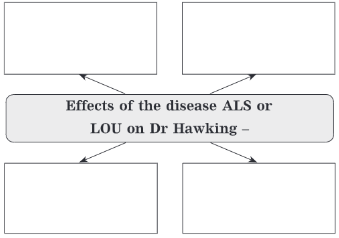
At the age of 17, Stephen started noticing that he was becoming increasingly clumsy and even fell down a couple of times, for no reason. This perplexed him and he went to see his family doctor, who diagnosed him as suffering from an extremely rare disease - ALS or LOU Gehrig's disease that affects the nervous system and eventually weakens all the muscles of the body. Stephen says that even as a child, his muscle co-ordination was nothing to write home about. He recollects that his handwriting would send his teacher into a fit of frenzy. Nor was he inclined towards sports. Nevertheless, this disease came as a bolt from the blue.
How much time he had left on this planet was very uncertain. The prognosis was bad and the doctors said they could not do much. Undaunted, Stephen decided to continue his research and even got engaged to a Jane Wilde. Hawking says that,
ironic as it may sound, it is at this dismal stage, began enjoying life the most. This he says was because he started living life for the moment and continued his doctoral research work with renewed vigour.
In the meanwhile, the disease worked its way into Stephen’s body and left him disabled. He began studying the concept of “Black Holes”, to get his Ph.D. By this time, he was confined to a wheelchair and was rapidly losing control of his hands and
speech. The study of “black holes” sparked his imagination with bright ideas. He made many epochmaking statements that shook established theories.Scientists believe that the universe began with a “Big Bang”. To explain this concept better, Stephen invented what is known as “Lie Algebra”.
A2. Complex Factual Activity:
(1) Complete the following web showing the effects of the disease ALS or LOU on Dr Hawking:
A3. Activities based on Vocabulary:
Match the words in Column 'A' with their meanings in Column 'B':
Say whether the following statements are True or False:
(1) At the age of 17, Dr Stephen Hawking was suffering from an extremely rare disease.
(2) Stephen's teachers liked his handwriting very much.
(3) He got his Ph.D. studying the concept of 'Black Holes'.
(4) At the dismal stage Dr Hawking enjoyed his life the most.
At the age of 17, Stephen started noticing that he was becoming increasingly clumsy and even fell down a couple of times, for no reason. This perplexed him and he went to see his family doctor, who diagnosed him as suffering from an extremely rare disease - ALS or LOU Gehrig's disease that affects the nervous system and eventually weakens all the muscles of the body. Stephen says that even as a child, his muscle co-ordination was nothing to write home about. He recollects that his handwriting would send his teacher into a fit of frenzy. Nor was he inclined towards sports. Nevertheless, this disease came as a bolt from the blue.
How much time he had left on this planet was very uncertain. The prognosis was bad and the doctors said they could not do much. Undaunted, Stephen decided to continue his research and even got engaged to a Jane Wilde. Hawking says that,
ironic as it may sound, it is at this dismal stage, began enjoying life the most. This he says was because he started living life for the moment and continued his doctoral research work with renewed vigour.
In the meanwhile, the disease worked its way into Stephen’s body and left him disabled. He began studying the concept of “Black Holes”, to get his Ph.D. By this time, he was confined to a wheelchair and was rapidly losing control of his hands and
speech. The study of “black holes” sparked his imagination with bright ideas. He made many epochmaking statements that shook established theories.Scientists believe that the universe began with a “Big Bang”. To explain this concept better, Stephen invented what is known as “Lie Algebra”.
A2. Complex Factual Activity:
(1) Complete the following web showing the effects of the disease ALS or LOU on Dr Hawking:
A3. Activities based on Vocabulary:
Match the words in Column 'A' with their meanings in Column 'B':
| Column 'A' | Column 'B' |
| (1) confined | (a) determined despite difficulties |
| (2) undaunted | (b) awkward |
| (3) perplexed | (c) restricted |
| (4) clumsy | (d) worried because of difficulty |
A4. Activities based on Contextual Grammar:
Change the following sentences as instructed:
(1) He made many epochmaking statements.
(Rewrite the sentence using Present Continuous Tense.)
(2) This disease came as a bolt from the blue.
(Rewrite the sentence using Past Perfect Tense.)
Ans. This disease had come as a bolt from the blue.
A5. Personal Response:
(1) What, do you think, are the miseries of a person who is confined to wheelchair?
A1. Simple Factual Activities:
Choose the correct alternative and complete the following sentences:
(1) Bholi is compared with _______________.
(a) a dumb cow (b) a kind cow (c) a dead cow
(2) _______________ was not ready to get married.
(a) Bishamber (b) Bholi (c) Bholi's friend
The bridegroom lifted the garland of yellow marigolds. A woman slipped back the silken veil from the bride’s face. Bishamber took a quick glance. The garland remained poised in his hands. The bride slowly pulled down the veil over her face.
“Have you seen her ?” said Bishamber to the friend next to him. “She has pockmarks on her face.”
“So what ? You are not young either.”
“Maybe. But if I am to marry her, her father must give me five thousand rupees.”
Ramlal went and placed his turban - his honour - at Bishamber’s feet. “Do not humiliate me so. Take two thousand rupees.”
“No. Five thousand, or we go back. Keep your daughter.”
“Be a little considerate, please. If you go back, I can never show my face in the village.”
“Then out with five thousand.”
Tears streaming down his face, Ramlal went in, opened the safe and counted out the notes. He placed the bundle at the bridegroom’s feet.
On Bishamber’s greedy face appeared a triumphant smile. He had gambled and won. “Give me the garland,” he announced.
Once again the veil was slipped back from the bride face but this time her eyes were not downcast. She was looking up, looking straight at her prospective husband, and in her eyes there was neither anger nor hate, only cold contempt.
Bishamber raised the garland to place it round the bride’s neck but before he could do so, Bholi’s hand struck out like a streak of lightening and garland was flung into the fire. She got up and threw away the veil.
“Pitaji” said Bholi in a clear loud voice; and her father, mother, sisters, brothers, relations and neighbours were startled to hear her speak without even the slightest stammer.
“Pitaji”, take back your money. I am not going to marry this man.”
Ramlal was thunderstruck. The guests began to whisper, “So shameless! So ugly and so shameless !”
“Bholi, are you crazy ?” shouted Ramlal. “You want to disgrace your family? Have some regard for out izzat!”
“For the sake of your izzat,” said Bholi, “I was willing to marry this lame old man. But I will not have such a mean, greedy and contemptible coward as my husband. I won’t, I won’t, I won’t.”
What a shameless girl! We all thought she was a harmless dumb cow.”
A2. Complex Factual Activities:
(1) What shocked the family members?
A3. Activities based on Vocabulary:
Find out synonyms from the passage for the following words:
(1) humiliate
(2) contempt
(3) prospective
(4) startled
A4. Activities based on Contextual Grammar:
Rewrite the following into indirect speech:
(1) "Be a little considerate, please. If you go back, I can never show my face in the village." "Then out with five thousand."
(2) "Pitaji, take back your money. I am not going to marry this man." "Bholi, are you crazy?" shouted Ramlal.
A5. Personal Response:
(1) What did you learn from Bholi's action of not getting married to Bishamber?
Choose the correct alternative and complete the following sentences:
(1) Bholi is compared with _______________.
(a) a dumb cow (b) a kind cow (c) a dead cow
(2) _______________ was not ready to get married.
(a) Bishamber (b) Bholi (c) Bholi's friend
The bridegroom lifted the garland of yellow marigolds. A woman slipped back the silken veil from the bride’s face. Bishamber took a quick glance. The garland remained poised in his hands. The bride slowly pulled down the veil over her face.
“Have you seen her ?” said Bishamber to the friend next to him. “She has pockmarks on her face.”
“So what ? You are not young either.”
“Maybe. But if I am to marry her, her father must give me five thousand rupees.”
Ramlal went and placed his turban - his honour - at Bishamber’s feet. “Do not humiliate me so. Take two thousand rupees.”
“No. Five thousand, or we go back. Keep your daughter.”
“Be a little considerate, please. If you go back, I can never show my face in the village.”
“Then out with five thousand.”
Tears streaming down his face, Ramlal went in, opened the safe and counted out the notes. He placed the bundle at the bridegroom’s feet.
On Bishamber’s greedy face appeared a triumphant smile. He had gambled and won. “Give me the garland,” he announced.
Once again the veil was slipped back from the bride face but this time her eyes were not downcast. She was looking up, looking straight at her prospective husband, and in her eyes there was neither anger nor hate, only cold contempt.
Bishamber raised the garland to place it round the bride’s neck but before he could do so, Bholi’s hand struck out like a streak of lightening and garland was flung into the fire. She got up and threw away the veil.
“Pitaji” said Bholi in a clear loud voice; and her father, mother, sisters, brothers, relations and neighbours were startled to hear her speak without even the slightest stammer.
“Pitaji”, take back your money. I am not going to marry this man.”
Ramlal was thunderstruck. The guests began to whisper, “So shameless! So ugly and so shameless !”
“Bholi, are you crazy ?” shouted Ramlal. “You want to disgrace your family? Have some regard for out izzat!”
“For the sake of your izzat,” said Bholi, “I was willing to marry this lame old man. But I will not have such a mean, greedy and contemptible coward as my husband. I won’t, I won’t, I won’t.”
What a shameless girl! We all thought she was a harmless dumb cow.”
A2. Complex Factual Activities:
(1) What shocked the family members?
A3. Activities based on Vocabulary:
Find out synonyms from the passage for the following words:
(1) humiliate
(2) contempt
(3) prospective
(4) startled
A4. Activities based on Contextual Grammar:
Rewrite the following into indirect speech:
(1) "Be a little considerate, please. If you go back, I can never show my face in the village." "Then out with five thousand."
(2) "Pitaji, take back your money. I am not going to marry this man." "Bholi, are you crazy?" shouted Ramlal.
A5. Personal Response:
(1) What did you learn from Bholi's action of not getting married to Bishamber?